


Business owners can give their SEO teams clearer rules for using AI across content, keyword research and technical audits. The framework is built around five controls: accuracy, accountability, security, fairness and sustainability.
Laura Iancu, founder of Searchpedia, wrote about this practical approach. Her guidance focuses on keeping AI as a research partner while people retain approval over published work and client data.
What Does an AI Governance Framework for SEO Cover?
Iancu developed the framework through work with brands over nearly two years. It is intended as a practical starting point for SEO teams and agencies rather than legal advice or a compliance lecture.
The framework assigns AI a supporting role in several common SEO tasks. The model can draft your content brief, cluster your keywords, or summarize a 40-page technical audit in about nine seconds. The SEO professional remains responsible for the final decision and every claim in published content.
A review of governance literature by Danilo Ribeiro, Thayssa Rocha, Gustavo Pinto, Bruno Cartaxo, Marcelo Amaral, Nicole Davila and Ana Camargo supports the emphasis on transparency and accountability. Their rapid review covered nine peer-reviewed secondary studies from IEEE and ACM published between 2020 and 2024. It found that those principles were the most common among the governance frameworks discussed, while few reviews explained actionable mechanisms or stakeholder strategies in detail. The study is available on arXiv.
How Should SEO Teams Check AI Accuracy?
AI can invent a search volume, misquote an algorithm update or cite a source that does not support the claim. Its confident delivery does not make those outputs reliable.
Iancu recommends treating every AI response like the first draft of a junior analyst. Review the material against source data before using it. In client work, this includes checking search metrics, quotations and references rather than allowing generated claims to move directly into a content brief, article or report.
Who Is Accountable for Published AI-Assisted Work?
The person or brand identified on published work owns its claims, regardless of how much AI contributed. Iancu points out that much SEO output becomes public, indexable and citable, so an inaccurate statistic can continue appearing in search features after publication.
That makes human approval part of the publishing process. The framework assigns AI research and drafting functions while leaving the final call with the SEO professional.
What Data Should SEO Teams Keep Out of AI Tools?
Customer data, employee data and confidential business information should not be entered into an AI tool unless the company or client has approved it. This applies to free trials as well as paid products.
For an unapproved trial, Iancu lists several conditions:
- Keep personally identifiable information, customer data and confidential data out of the tool.
- Require the provider to confirm in writing that it will not train on the data.
- Set an end date for the trial and require deletion of submitted data.
- Avoid third-party tools that can control a browser and collect other browsing activity.
These controls are especially relevant when a task involves an analytics export, Search Console data, client research or other confidential information. Apply the same data precautions when testing an unfamiliar tool.
How Should Teams Match AI Models to SEO Tasks?
Not every SEO assignment requires a large, expensive reasoning model. Iancu reserves heavier models for coding, complex data work and genuinely difficult problems. Everyday assignments such as drafting a meta description, summarizing a competitor page or rewriting an internal Slack message can use the lightest suitable model.
This approach addresses compute cost and keeps routine work from depending on a tool for tasks the team could handle directly. Use AI when it adds value to the assignment, depending on the work required, and select a model based on that work.
How Can SEO Teams Check AI Fairness?
AI models can reproduce assumptions from their training data. Those assumptions may appear in the tone, framing or intended audience of content and keyword work. Iancu recommends checking model-assisted work for those effects and editing inclusive language personally rather than assuming the model will produce it without instruction.
How Do AI Policies Become Part of Team Culture?
A written policy has limited value without a process for discussing what happens in daily work. Iancu recommends creating an open feedback channel, such as a Slack channel, where staff can share tools they built, failures and successful use cases.
One client developed a complaint-response generator as an internal tool. The code was shared and reviewed, including a security review before wider use. Incidents were reported promptly. Iancu says these habits depend on an active forum and accountable owners, rather than a PDF that receives little attention after its first week.
Her working framework calls for:
- A short set of principles written in plain language.
- Clear rules covering what data may enter an AI tool.
- Guidance for selecting a model suited to the task.
- A shared channel for wins, failures and near-misses.
- A named person or team to receive incident reports.
The Brookings analysis of AI-agent governance makes a related distinction for more autonomous systems. It argues that governance must move beyond reviewing what a model said and include permissions, traceable evidence, runtime monitoring and clear accountability for what a system did. The analysis also notes that evidence on deployed value remains largely pre-agentic, so governance is developing before deployments can fully test it. Brookings published the analysis on October 12, 2026.
What to Do Now
- List every AI tool used by your team and agency partners.
- Mark each tool as approved, unapproved or awaiting review.
- Write rules for customer data, employee data and confidential information.
- Assign a reviewer for AI-assisted metrics, quotations, sources and published claims.
- Create a shared channel for feedback, failures and incident reports.
FAQ
What Are the Five Pillars of AI Governance for SEO?
The framework uses accuracy, accountability, security, fairness and sustainability as its five pillars.
Who Is Responsible for Claims in AI-assisted SEO Content?
The person or brand named on the published content is responsible for its claims, even when AI helped draft the work.
Can SEO Teams Use AI With Client Data?
Customer data should only be entered into a tool approved by the company or client. For unapproved trials, the framework requires written confirmation that the provider will not train on the data, a time limit and deletion of submitted data.
SEOScanPro
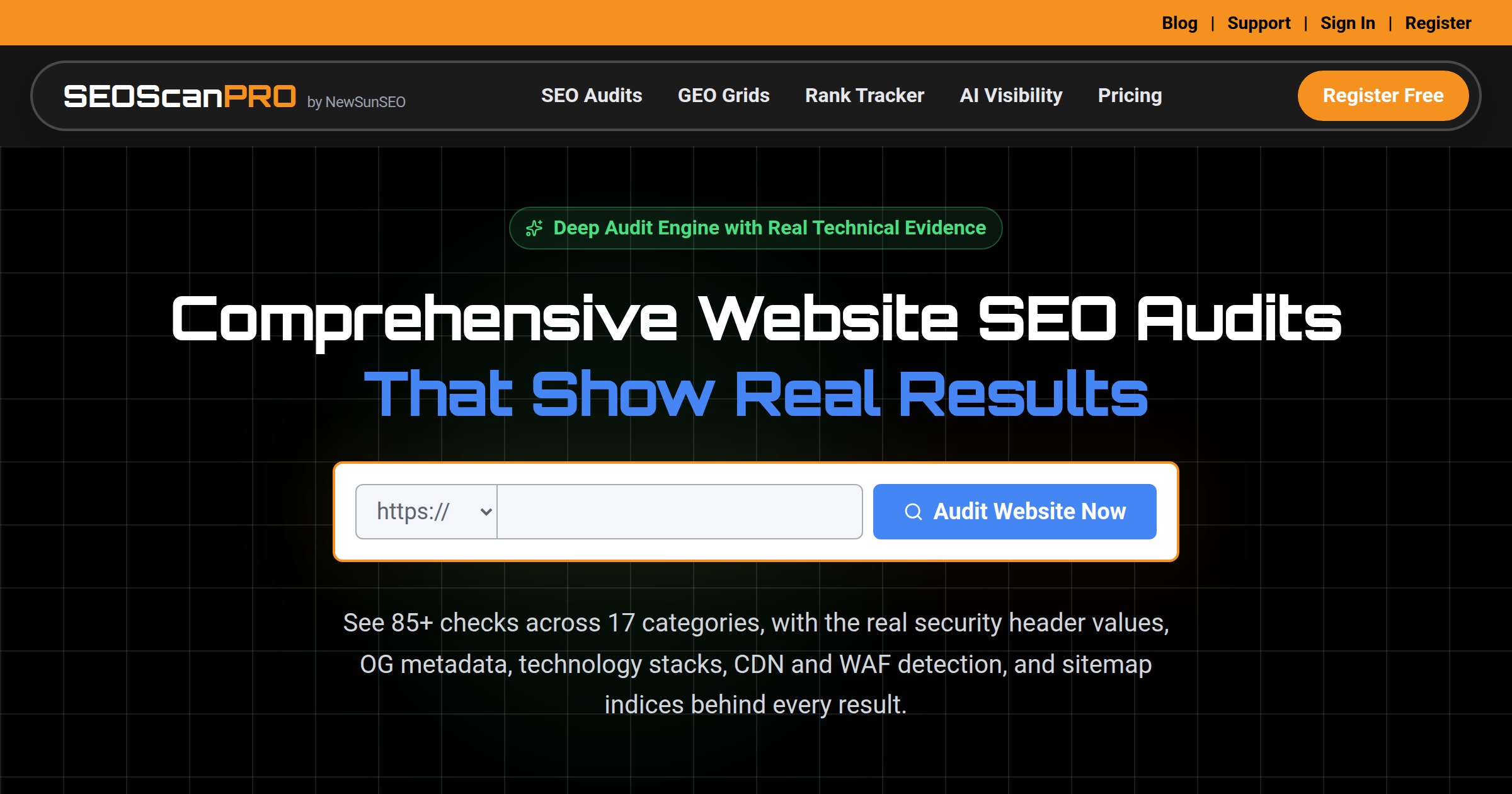
SEOScanPro runs a full technical audit of a site and shows the measured result behind every check. Open the Search Console analytics view.
Sources
Want help with this in Myrtle Beach or Long Island? Talk to us.
NewSunSEO
Grow in Google and AI Search
AI-SEO, local search, paid ads and websites from one team, with offices on Long Island and in Myrtle Beach.
- AI-SEO
- Local AI-SEO
- AI Consulting
- PPC
- Web Design
- Web Development
- Long Island Office(631) 320-1700
- Myrtle Beach Office(843) 492-7131
Request a Free Proposal
Tell us about your business and where you want to grow.
We will reply by email to talk through your goals and what a proposal would include.
We use your details only to reply to you and send what you asked for. See our Privacy Policy.

