



AI search visibility helps businesses get cited, described accurately, and recommended when buyers ask AI platforms which company to choose. The work behind that visibility is an authority strategy built from four parts: picking the topics the brand should own, aligning every public profile around the same identity, publishing evidence instead of claims, and earning recognition on sites AI systems already trust.
What Brand Authority Means in AI Search
Brand authority is the credibility a business builds around its expertise, services, and industry. In AI search, that credibility shows up as the information available online: whether the company is connected to the right topics, whether claims are supported, and whether third-party sources back the picture. There is no universal authority score across AI platforms. A brand can surface for one question and disappear for another, because each platform pulls from different sources and assembles a different response. Three outcomes matter separately: being mentioned, having a page cited, and being recommended. Each signals a different level of trust from the model and a different kind of value for the brand.
Step 1: Identify the Topics Your Brand Should Own
The right starting point is the business, not a list of popular prompts. The services that matter most, the buyers who need them, and the questions that come up before an inquiry each define where authority should be built. An agency offering SEO, for example, can demonstrate expertise through topics like technical SEO audits, website performance, content strategy, and search visibility analysis. Each topic gives the positioning depth and shows the practical knowledge behind the service. Tools like Semrush One’s Prompt Research help surface real questions around those services, and Competitor Research highlights prompts where rival brands appear but your brand does not. Each opportunity is worth the effort only when the business can answer it well and when appearing there could influence a real buying decision.
Step 2: Make Your Brand Identity Consistent
Before adding new content, the existing footprint needs to tell a coherent story. The homepage, About page, service pages, author profiles, and external listings should all communicate the same company name, services, locations, and areas of expertise. Consistency does not require identical wording, only compatible facts. A brand positioning itself as an enterprise specialist, for instance, needs service details and project evidence that back that positioning. Watch for outdated profiles, discontinued services, conflicting addresses, and vague descriptions, since those leave conflicting information online. A simple test: after reading these pages, could someone unfamiliar with the company clearly explain what it does, who it serves, and what shows its expertise?
Step 3: Publish Content That Demonstrates Expertise
Publishing more articles is easy. Showing real knowledge takes more work. The best targets are questions the business can answer from experience: how a process works, what affects cost, when a service fits, and which limits a buyer should understand. Answers should come from what the team has actually seen, not from what competing articles already say.
Turn Experience Into Evidence
Useful evidence includes documented case studies, original research, expert explanations, and concrete examples from completed work. A solid case study explains the problem, the approach, the result, and the constraints involved. Readers need enough context to judge whether the experience applies to their situation. Original research should include the methodology, sample size, and date. Expert guidance should name the contributor and the relevant qualifications. Together, these create material worth referencing and give customers a clearer basis for evaluating the brand.
Connect Supporting Content to Your Services
Informational content should make the brand’s expertise easier to grasp without turning every article into a sales pitch. A migration guide, for example, can link to an enterprise SEO service page, which can then point readers to relevant case studies and specialist profiles. Each connection should help a reader continue exploring the topic, with every page having a clear purpose and links that make supporting evidence easier to find.
Step 4: Earn Relevant Third-Party Recognition
A company website explains its own claims. Independent coverage gives readers another perspective and can add context that a brand-controlled page cannot. Useful contributions include expert commentary, original research, interviews, industry association resources, and detailed customer reviews. Competitor and source analysis helps identify where rival brands are being mentioned or cited, and reviewing those pages directly shows whether the audience, relevance, and editorial quality are a fit. A cited source is a research lead, not an automatic outreach target. The brand needs a legitimate reason to contribute and a relevant audience to reach. Specific customer reviews that describe the service, the experience, and the outcome carry more weight than generic praise, and they create useful evidence for both readers and AI systems.
Step 5: Make Your Evidence Easy to Find and Understand
Strong evidence loses value when visitors cannot find it or do not understand what it proves. Place direct answers near the start of relevant sections, write descriptive headings, and explain technical terms when they appear. Important qualifications should sit next to the claims they clarify. Comparisons should state the criteria being used. Statistics should include the source and publication date. Service claims should link to relevant supporting examples where possible. Technical audits help confirm that important pages load correctly, are accessible, and are easy for both users and crawlers to navigate. Accessibility supports authority work, but it does not create credibility on its own. A technically accessible page still needs accurate information, clear context, and meaningful evidence to do its job.
Step 6: Measure Whether Your Authority Work Improves Visibility
Before making substantial changes, establish a baseline so there is a clear point of comparison. In Semrush One, Visibility Overview helps assess existing presence, Brand Performance provides Share of Voice, sentiment, and narrative analysis, and Prompt Tracking monitors selected questions over time. Choose prompts tied to core services and buying decisions, then keep the set consistent so changes can be compared. Patterns to watch for include more relevant mentions, citations to stronger pages, clearer descriptions of the brand, and shifts in visibility relative to competitors. These are indicators, not proof that a specific update caused the change. Documenting completed work alongside visibility trends and business outcomes keeps reporting grounded and helps the results be read in context.
Common Brand Authority Mistakes
Claiming expertise without showing it is the first trap. Phrases like “trusted” or “leading” add little without surrounding evidence to back them up. Pursuing every mention regardless of relevance is another common error: third-party coverage is more useful when it reaches a fitting audience and accurately represents the business. Filling the website with overlapping articles creates the same problem in reverse. Multiple thin pages that answer essentially the same question make the site harder to navigate without adding real information or evidence. Treating a single favorable AI response as proof of success is also misleading, since AI-generated answers can vary. Building authority requires a repeatable process for evaluating visibility and representation over time.
FAQ
What is brand authority in AI search?
Brand authority in AI search is the credibility a business builds around its expertise, services, and industry, shown in online information and in how AI platforms use it to mention, cite, or recommend the brand.
How do you measure brand authority for AI search?
Measure it by tracking AI visibility over time. Useful inputs include Share of Voice, sentiment, narrative analysis, and prompt tracking for questions tied to core services and buying decisions, compared against a consistent baseline.
What are the most common brand authority mistakes in AI search?
The most common mistakes are claiming expertise without evidence, pursuing mentions on irrelevant sites, publishing overlapping thin articles, and treating a single favorable AI response as proof of authority.
Related coverage
SEOScanPRO
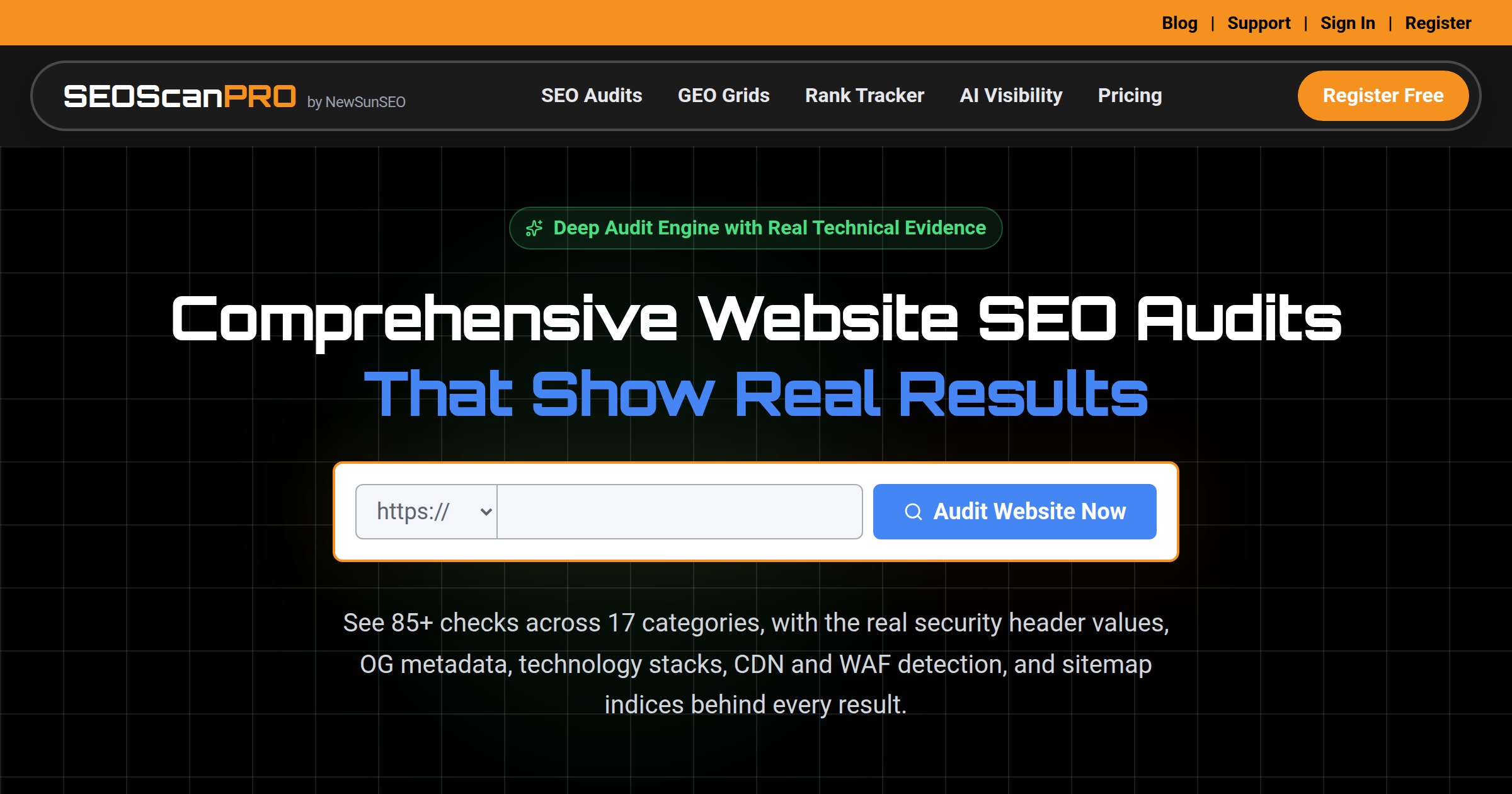
SEOScanPRO runs a full technical audit of a site and shows the measured result behind every check. Open the AI visibility report.
Want help with this in Myrtle Beach or Long Island? Talk to us.
NewSunSEO
Grow in Google and AI Search
AI-SEO, local search, paid ads and websites from one team, with offices on Long Island and in Myrtle Beach.
- AI-SEO
- Local AI-SEO
- AI Consulting
- PPC
- Web Design
- Web Development
- Long Island Office(631) 320-1700
- Myrtle Beach Office(843) 492-7131
Request a Free Proposal
Tell us about your business and where you want to grow.
We will reply by email to talk through your goals and what a proposal would include.
We use your details only to reply to you and send what you asked for. See our Privacy Policy.

