



What Is a Topic Cluster?
A topic cluster (or content cluster) is a group of interconnected, thematically related pages on a website. Each cluster is built around one pillar page that provides a broad overview of a topic, plus multiple subpages that cover related subtopics in depth. The pillar and subpages are connected through internal links so search engines, AI answer engines, and readers can move between them and understand how the content fits together.
Restaurant team management platform 7Shifts demonstrates the model in practice. A guide to restaurant costs acts as its pillar page and links to separate articles on restaurant bookkeeping, accounting, and labor costs.
Why Topic Clusters Matter for SEO and AI Search
Grouping related content into clusters can build topical authority.
Publishing high-quality pages across a single topic tells search engines the site is an authority on that subject, and AI search platforms pull from authoritative sources when composing answers. Clusters also align well with query fan-out, the process where an AI platform expands a user question into several related sub-queries before composing an answer. A clean cluster gives the system a distinct page to cite for each sub-query, which increases mentions inside AI answers.
Internal linking between a pillar and its subpages makes site structure clearer for crawlers, AI systems and readers by pointing each subpage back to the pillar. Establishing subject matter credibility through this structure brings in the target audience, since people tend to engage with companies they consider credible.
How to Create and Monitor a Topic Cluster in Five Steps
Step 1: Choose a Core Topic
Pick a topic broad enough to support several pieces of content, but not so broad that the cluster becomes unfocused. Useful questions to ask during brainstorming: which topics are relevant to the brand, which have worked well historically, what content already exists, which topics the audience cares about, and which topics competitors cover. New sites often see stronger early results by building authority around a single topic or service line before expanding. For a pet supply business, dog toys would be a workable core topic.
Step 2: Research the Topic for Keywords
Look for keywords with intent that matches the cluster’s goals and a difficulty level that gives the site a realistic chance of ranking. Search intent can be navigational, informational, commercial, or transactional. Clusters aimed at driving sales lean toward commercial and transactional terms. A keyword difficulty score indicates how hard it will be to crack the top ten organic results for that term. For the dog toy example, a term like dog toys for aggressive chewers could be a workable starting point if the difficulty is in range.
Step 3: Identify Pillar Pages and Subpages
Use a keyword strategy tool to generate pillar and subpage ideas from the starting keyword. The tool groups search terms by shared intent into keyword clusters. Mapping each keyword cluster to a single page (rather than splitting a cluster across several pages) prevents keyword cannibalization, the situation where two pages compete for the same terms and force search systems to guess which one to cite. The pillar page should be the most complete resource on the core topic, target the broad head term rather than a narrow variation, and have its H2s and H3s mapped to the subtopics the subpages will cover. Prioritize pillar and subpage ideas by evaluating intent, search volumes, and difficulty scores, and keep a keyword map as the list grows. Mix highly specific queries with popular ones to start earning visibility faster.
Step 4: Create Quality Content
Useful, authoritative, accurate, and relevant content performs better. Start with the pillar page, because it provides the broad overview and forms the foundation of the cluster. Structure it around the subtopics that will get their own subpages so adding internal links later is straightforward. Publish subpages afterward at a steady pace. Internal links should run both ways: from the pillar to subpages and from subpages back to the pillar, with keyword-rich anchor text that helps Google understand the relationship. When creating or refreshing content, write for people first, keep it clear and concise, structure and format for easy scanning, and link to other pages in the cluster with descriptive anchor text.
Step 5: Measure Cluster Performance
Tracking performance shows what is working and what needs improvement. That data makes it possible to expand top-performing clusters with more content, revise underperforming pages, and adjust the strategy. A cluster’s health comes down to a few specific measures: organic traffic to the pillar page versus its subpages, how often visitors click between cluster pages, and how much of the cluster’s target keyword set is actually ranking. Together these measures show whether the cluster is functioning as a connected unit or just a set of unrelated pages that share a theme. Clusters are also judged on whether they appear in AI-generated answers. A well-built cluster gives an AI system a clear, authoritative page to point to for each sub-query, which supports appearances in AI Overviews and similar answer experiences, and is worth tracking alongside Google rankings. Treating a cluster as a living structure rather than a one-time project pays off: keep the pillar page evergreen as the topic evolves, and add new subpages as fresh subtopics earn a place.
Real Topic Cluster Examples Worth Studying
Healthline’s Allergy Content Cluster
An Everything You Need to Know About Allergies article acts as the pillar page, overviewing symptoms, causes, and treatments. Each subtopic has its own subpage that goes deeper, and the pillar links out to those subpages. Readers start broad on the pillar and drill down into the specific area they need.
Petcube’s Puppy Care Content Cluster
A Puppy Care 101 guide acts as the pillar page, covering the basics a first-time puppy owner needs. At the end of many sections, the pillar links to deeper subpages on individual subtopics. Other subpage topics include raising a puppy, adopting from a shelter, puppy-proofing, puppy supplies, and crate training.
Wistia’s Video Marketing Guide
The video marketing guide is the pillar page for a cluster that includes subpages on video marketing funnel stages, examples, and promotion. Unlike an overview-style pillar, this guide is structured as sequential chapters that build on each other, a format that suits topics where the subtopics depend on one another. The pillar also includes instructional videos, making it a strong resource on its own and adding to the site’s topical authority.
FAQ
What is a topic cluster in SEO?
A topic cluster is a group of thematically related pages built around one pillar page, with multiple subpages covering subtopics in depth. The pillar and subpages connect through internal links so search engines and AI systems can recognize the site’s topical authority.
Why are topic clusters important for AI search?
Topic clusters may give AI answer engines a page to cite for each sub-query, which can increase mentions and citations in their answers.
How do you measure the performance of a topic cluster?
Track organic traffic to the pillar versus its subpages, the click flow between cluster pages, the share of the cluster’s target keyword set that is ranking, and appearances in AI-generated answers alongside standard Google rankings.
SEOScanPRO
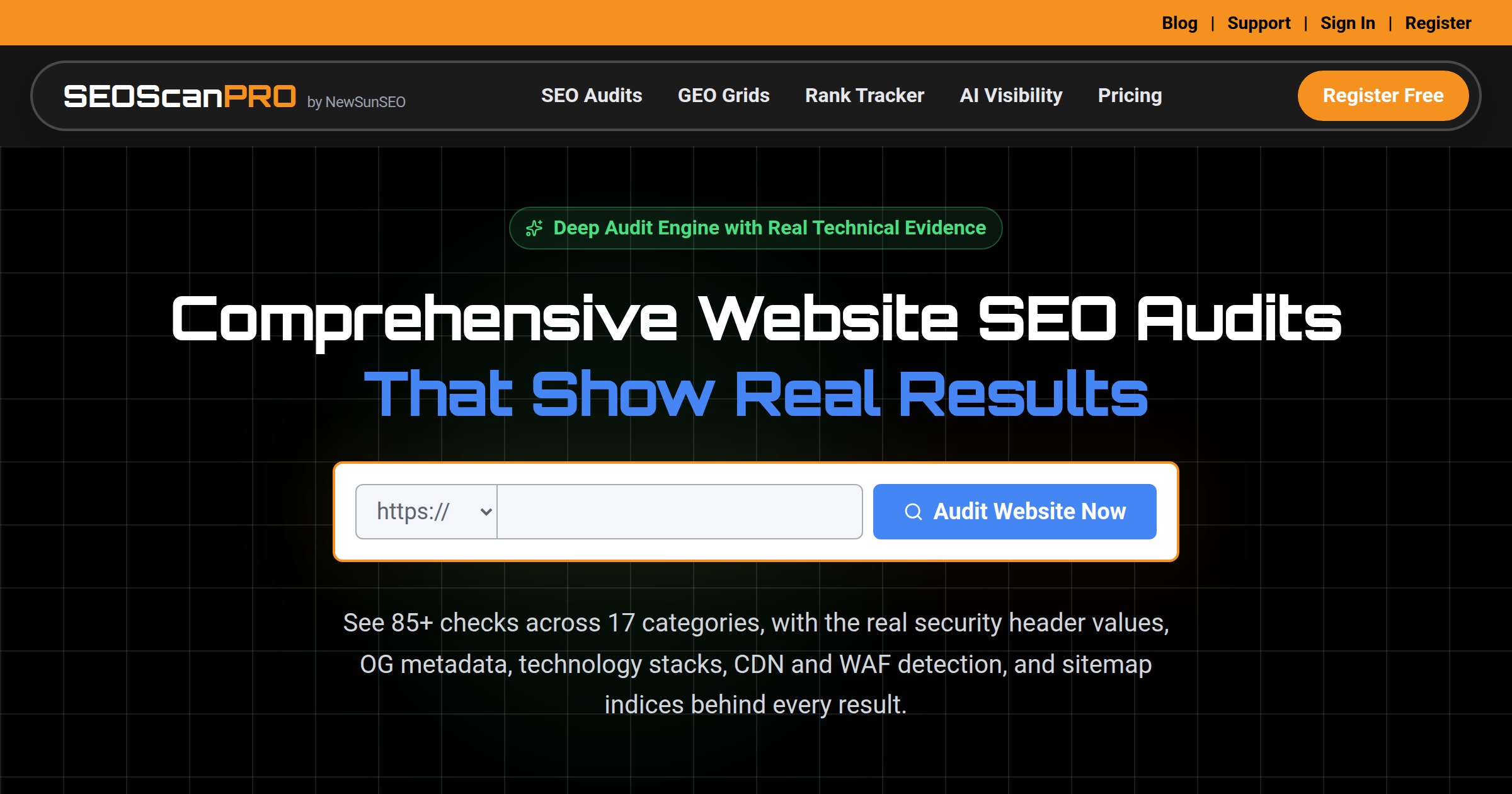
SEOScanPRO’s AI visibility report runs a full technical audit of a site and shows the measured result behind every check. Open the AI visibility report.
Want help with this in Myrtle Beach or Long Island? Talk to us.
NewSunSEO
Grow in Google and AI Search
AI-SEO, local search, paid ads and websites from one team, with offices on Long Island and in Myrtle Beach.
- AI-SEO
- Local AI-SEO
- AI Consulting
- PPC
- Web Design
- Web Development
- Long Island Office(631) 320-1700
- Myrtle Beach Office(843) 492-7131
Request a Free Proposal
Tell us about your business and where you want to grow.
We will reply by email to talk through your goals and what a proposal would include.
We use your details only to reply to you and send what you asked for. See our Privacy Policy.

