


Reviewing the page that returns when a customer searches your company name with a product often gives a clearer read on your reputation than almost any other signal, and that page can either reinforce trust or undermine it.
Why branded search results deserve closer attention
Branded searches are queries built around a specific company or product name, and the results page carries more weight in consumer decisions because the searcher already knows what they want. Clean branded search results give the company visibility, answer common product questions, and can lift conversion rates compared with broader search terms. Third-party listings, complaints, or confusing snippets in branded results can create doubt before a prospect reaches the company’s own site.
The challenge is that the first page of Google is no longer simple to shape. Many slots that used to belong to a brand’s own properties are now occupied by third-party content, AI-generated answers, and feature blocks that sit outside a marketer’s direct control. That shift is what creates the four risks worth monitoring.
Risk 1: Over-reliance on a small set of positive results
First-page results are now split between a brand’s owned assets and third-party sites, and a small set of favorable listings creates fragility: a single ranking change can strip away the supporting evidence a searcher sees. Brands that publish guest posts on industry trade publications, earn mentions in news outlets, and seed product reviews on comparison sites build a wider portfolio of brand-linked assets, so trust signals arrive from multiple sources a customer already respects.
Risk 2: Negative content rising faster than ever
With the growth of Google AI Overviews and ChatGPT-style search, unfavorable material is climbing to the top of branded results faster than in the past. A single Reddit thread, a questionable influencer review on YouTube, or an outlandish blog post can shape the story a searcher sees, sometimes before the brand’s own content even appears.
Monitoring needs to extend beyond traditional blue links. Track whether negative items are moving from page two onto page one, whether specific threads are gaining visibility, and how branded results look inside AI surfaces. When negative placement trends upward, bringing in an online reputation management specialist is often the right next step.
Risk 3: Search features introducing unintended consequences
Features such as image results, People Also Ask boxes, autocomplete suggestions, news results, Google Discover, Google Trends, and Top Stories can reveal as much about a brand as the standard organic listings. They are also harder to access and harder to assess. Brands that only review the blue links and AI Overviews miss the side panels, carousels, and suggested queries that increasingly shape the first impression of a search.
Risk 4: Positive results that lack diversity
Duplicating owned content or placing brand mentions on a few third-party sites is not enough to protect a brand. A resilient branded search presence needs mentions across trusted outlets with independent editorial standards, including Wikipedia, Reuters, the Associated Press, and other recognized media. Variety reduces dependence on any single ranking asset and makes the page harder to destabilize if one source drops out.
How to conduct a branded search risk audit
A branded search risk audit is a structured review of what a customer actually sees when they search for a brand. The process has five clear steps:
- Identify branded queries. List the terms customers search for around the brand, including brand name, product names, and common variations.
- Record initial results. Capture the full first page, including third-party links and every search feature that appears, from images to People Also Ask to news blocks.
- Categorize each result. Sort every entry as positive, negative, neutral, owned, or third-party, so patterns become visible.
- Track themes and movement. New narratives can surface at any time, so revisit branded results often and watch for items moving up the page.
- Prioritize vulnerability. Rank the weak spots by visibility, authority, ranking volatility, and likely impact on conversion.
Run on a recurring basis, this audit shifts branded search from a one-off check into a continuous reputation signal. For brands that need a faster read on which suburbs and service areas show their pages consistently, SEOScanPRO’s GEO Grids map rank position across an entire service area, so a business can see exactly where it is visible and where it has dropped out, rather than relying on a single city-wide average.
Treat branded results as an early warning system
Regular branded SERP monitoring lets a brand act before a small issue becomes a headline, and over time the goal is to surround the brand’s own pages with reviews, third-party articles, and listings so that no single negative result dominates page one.
FAQ
What are branded search results?
Branded search results are the listings that appear when a user searches for a specific company or product name. They typically include the brand’s own pages alongside third-party content, reviews, and search features such as images, People Also Ask, and news blocks.
Why are branded search results important for reputation management?
Searchers who already know the brand by name treat the results they see as a proxy for the company itself. A first page built from positive third-party reviews, trade press coverage, and the brand’s own owned pages lifts click-through and conversion, while a single negative article, an unresolved complaint, or a thin listing in the same ten slots can undo that work in a single visit.
How often should a brand audit its branded search results?
Branded results shift as new content is published, AI answers are updated, and feature blocks change, so an audit should run on a recurring basis rather than once. Tracking how specific themes, listings, and ranking positions move between audit cycles is what turns a single review into an early warning system for reputation risk.
Related coverage
- ChatGPT SEO: 8 Proven Strategies to Show Up in AI Search Results (2026)
- Branded Search: The Most Underrated SEO Tactic for Small Businesses
- AI Mode Search: Why 88% Trust Results Without Comparing
BizScoreAI
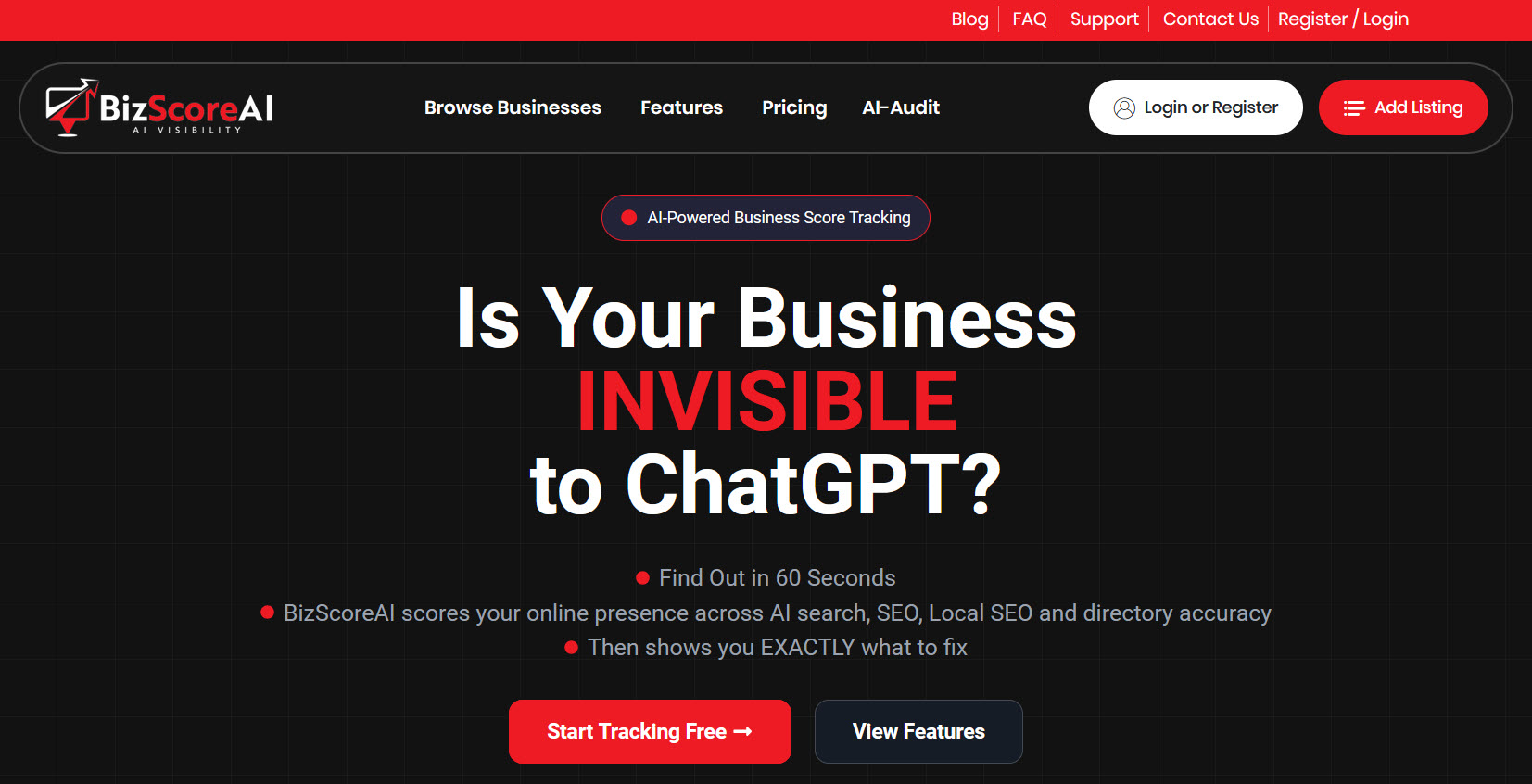
BizScoreAI’s AI visibility scan scores how visible a business is to AI search and shows what its listing looks like to the engines people ask. Open the AI visibility scan.
Want help with this in Myrtle Beach or Long Island? Talk to us.
NewSunSEO
Grow in Google and AI Search
AI-SEO, local search, paid ads and websites from one team, with offices on Long Island and in Myrtle Beach.
- AI-SEO
- Local AI-SEO
- AI Consulting
- PPC
- Web Design
- Web Development
- Long Island Office(631) 320-1700
- Myrtle Beach Office(843) 492-7131
Request a Free Proposal
Tell us about your business and where you want to grow.
We will reply by email to talk through your goals and what a proposal would include.
We use your details only to reply to you and send what you asked for. See our Privacy Policy.

