



Organic traffic grows when SEO work aligns with current search engine ranking factors, and clear priorities turn that work into measurable gain.
Why priorities matter more than tactics
SEO has thousands of possible tactics, but only a few priorities consistently drive organic traffic. Search engines often reward sites that solve the searcher’s job on the page, which is established through on-page signals and off-page evidence, so the priorities below are organized around that sequence.
Which SEO priorities actually move organic traffic?
The priorities that show up most often in current search engine documentation and in the work that wins rankings fall into four areas: intent match, technical accessibility, on-page quality, and authority. Each one feeds the next, and skipping one caps the return on the others.
Match the search intent behind every target query
A page ranks when its format and content match what searchers want for a query. A how-to query wants steps, a comparison query wants options laid out side by side, and a buy query wants product detail and proof. Pages that try to rank for a query without matching its format usually stall on page two because dwell time and engagement signals tell the engine the answer did not fit. The fastest priority check on any page is to compare its format, angle, and depth against the top three results already ranking for the query.
Fix the technical foundation that blocks crawling and indexing
Even strong content cannot earn traffic if the engine cannot reach it or render it. Crawl budget is wasted on broken internal links, redirect chains, and orphan pages, and Core Web Vitals still set a floor on user experience that feeds ranking. A technical audit that maps crawl paths, page speed, schema, and index coverage is the prerequisite for every other priority, because fixes here lift the ceiling on what the on-page work can achieve.
Strengthen on-page signals: title, structure, entities, and depth
Once a page is reachable, the on-page layer tells the engine what the page is about and how well it answers. Tight title tags that mirror the query, a heading structure that walks the reader through the answer, and clear use of named entities (people, places, products, organizations) all sharpen the page’s relevance score. Thin pages that cover a topic in a paragraph rarely earn featured snippets or sustained rankings, so depth, original data, and first-hand examples carry more weight with every update.
Build authority through links, brand mentions, and trust signals
Off-page evidence is what tips close rankings into page-one rankings. Earned links from relevant sites, branded searches that confirm demand, and clear trust signals (about pages, authorship, contact details, reviews) all feed the authority picture search engines use to break ties between otherwise equal pages. Digital PR, original research, and partnerships that put a brand in front of its real audience are the tactics that move this priority.
How should SEO priorities be ordered?
The order above is also the build order. Technical accessibility comes first because it gates everything, intent match comes next because it sets the target, on-page quality delivers the answer, and authority provides the final push. Running audits on a fixed cadence, such as quarterly technical reviews and monthly intent and competitor checks, keeps each priority fresh as search behavior shifts. Tools that surface crawl, speed, and content gaps in one pass shorten the loop between finding an issue and shipping a fix. SEOScanPRO runs a full technical audit of a site and shows the measured result behind every check, which keeps this layer from drifting.
What does progress on these priorities look like?
Progress shows up as more indexed pages, faster load times, higher average position on tracked queries, and a steady lift in organic sessions and conversions. The right dashboard ties each priority to one or two leading indicators so a team can see which lever is moving before the traffic line follows. Reporting on rank position alone hides the cause; reporting on crawl coverage, intent match rate, content depth, and referring domain growth shows the work that produces the rank.
FAQ
What is the single highest-leverage SEO priority?
Matching the search intent behind every target query is the most important priority, because a page that does not match intent cannot recover through technical work or links alone.
How often should SEO priorities be reviewed?
Technical and on-page priorities benefit from a monthly review, while authority-building work, such as digital PR and partnerships, runs on a quarterly or campaign cadence.
Do on-page signals still matter for organic traffic?
Yes. Title tags, heading structure, entity use, and content depth shape relevance scores and influence both rankings and featured snippet eligibility.
Related coverage
- Does ‘Save 30%’ in Meta Descriptions Actually Boost Organic Traffic? What SEO Testing Reveals
- YouTube SEO for Small Businesses: How to Rank Videos and Win Local Viewers in 2026
- Organic vs. Direct Traffic: What the Numbers Really Tell You
SEOScanPRO
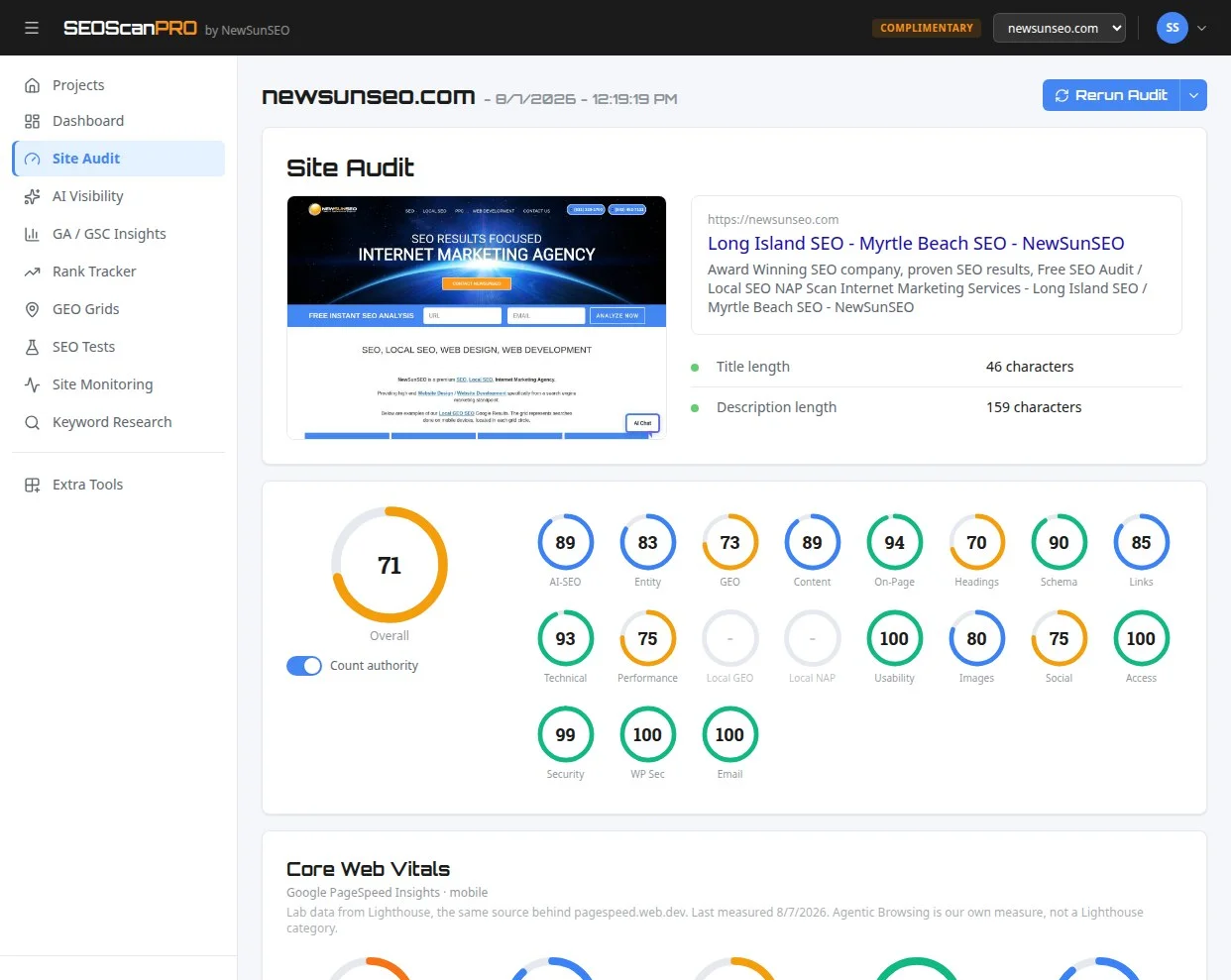
The SEOScanPRO site audit tool runs a full technical audit of a site and shows the measured result behind every check. Open the site audit tool.
Want help with this in Myrtle Beach or Long Island? Talk to us.
NewSunSEO
Grow in Google and AI Search
AI-SEO, local search, paid ads and websites from one team, with offices on Long Island and in Myrtle Beach.
- AI-SEO
- Local AI-SEO
- AI Consulting
- PPC
- Web Design
- Web Development
- Long Island Office(631) 320-1700
- Myrtle Beach Office(843) 492-7131
Request a Free Proposal
Tell us about your business and where you want to grow.
We will reply by email to talk through your goals and what a proposal would include.
We use your details only to reply to you and send what you asked for. See our Privacy Policy.

