


Selecting the right keyword seeds comes first in any international SEO campaign, since every downstream decision and asset depends on those starting terms.
The work splits into two stages: finding the terms in the source language that the brand should build around, then proving that those terms have real equivalents in each target market before any content is written. Skipping either stage leaves the campaign guessing.
Why seed selection matters more in international SEO
Domestic keyword research usually starts with a product or service the team already understands, in a language the team already speaks. International work adds a layer of uncertainty: the team has to assume that the search behavior that powers one market also exists in another, and then verify it.
A seed list connects a brand’s offer to the search terms people type in each local market. If the initial keyword translations are inaccurate, each localized keyword derived from them will carry that same error. That is why many of the most expensive mistakes in international SEO are made at the seed stage, not the content stage.
Stage 1: Build the seed list from the source market
The source market is usually the original home market, the language the brand operates in natively, and the place with the most existing search data. The goal here is not to find every keyword the brand could rank for; it is to find the small set of high-intent terms that define the product or service category.
Start from the brand’s own offer, not a generic category
Generic category keywords attract informational traffic that rarely converts. A seed list built from the specific products, use cases, and buyer questions the brand actually serves produces terms that align with what the site can credibly rank for.
Pull from internal data first
Existing analytics, search-console queries, on-site search logs, and sales-team notes are the most reliable source of seed terms. These reflect real customer language, not assumptions about it. A term a sales rep hears every week is a stronger seed than a term a tool suggests at high volume.
Validate with third-party keyword tools
Once the internal list is drafted, run it through standard keyword research tools to expand variants, spot search-volume patterns, and surface terms the team may have missed. Treat the tool output as a supplement, not the primary source, because tool suggestions drift toward generic, high-volume terms that dilute intent.
Stage 2: Translate, then verify the translations
Translating a seed list word for word is often cited as the most common error in international SEO. Direct translation often yields search terms that native speakers would not type, because search behavior follows local phrasing, brand conventions, and category vocabulary that do not align cleanly across languages.
Use a localized translator, not a generic translator
A translator unfamiliar with the market often produces literal word-for-word equivalents that appear correct but fail in practice. The cost of hiring a market-aware translator is small compared with the cost of replacing content built around literal keyword choices that performed poorly.
Run the translated seeds through local keyword tools
Each target market has keyword tools and search-data sources that reflect actual local search behavior. The translated seeds need to be checked in those tools to confirm search volume exists and to discover related terms the translator may have missed. A term with no measurable volume in the local tool is not yet a valid seed.
Check competitor pages in each market
Local competitors reveal which terms the market actually rewards. Reviewing the titles, headings, and visible copy of top-ranking pages in each target market shows which seeds translate into ranking opportunities and which do not. This step also exposes terminology conventions the translator alone would not surface.
What to do when a seed has no local equivalent
Some products, services, or category terms genuinely do not exist in a target market under the same name. In those cases the seed list needs a different approach: build around the problem the customer is trying to solve, expressed in local language, rather than the product name.
The output is still a keyword list, but the list is built from observed customer need rather than from the brand’s existing vocabulary.
Putting the seed list to work
Once a validated seed list exists for each target market, it feeds every downstream decision: which pages get localized first, which markets deserve dedicated domains or subfolders, and how content briefs are written for local writers. A short, verified list is more useful than a long, assumed one.
Across an international site, consistent on-page structure still matters. For businesses that want a quick read on how a site is actually performing in search, including how its pages parse for AI-driven results, a technical audit such as SEOScanPRO can show the measured state of the on-page and technical signals the seed list will eventually lean on.
FAQ
What is a keyword seed in international SEO?
A keyword seed is a starting search term in the source market that defines a product, service, or category. It is the term translated and validated for each target market to build a localized keyword list.
Why can’t seeds be translated directly?
Direct translation often produces terms that native speakers do not actually use in search. Local phrasing, brand conventions, and category vocabulary differ by market, so translated seeds must be verified with local keyword tools and competitor research.
Where should international SEO seed research start?
Seed research should start with internal data from the source market, including analytics, search-console queries, on-site search logs, and sales notes. That list is then expanded with keyword tools and translated for each target market.
SEOScanPRO
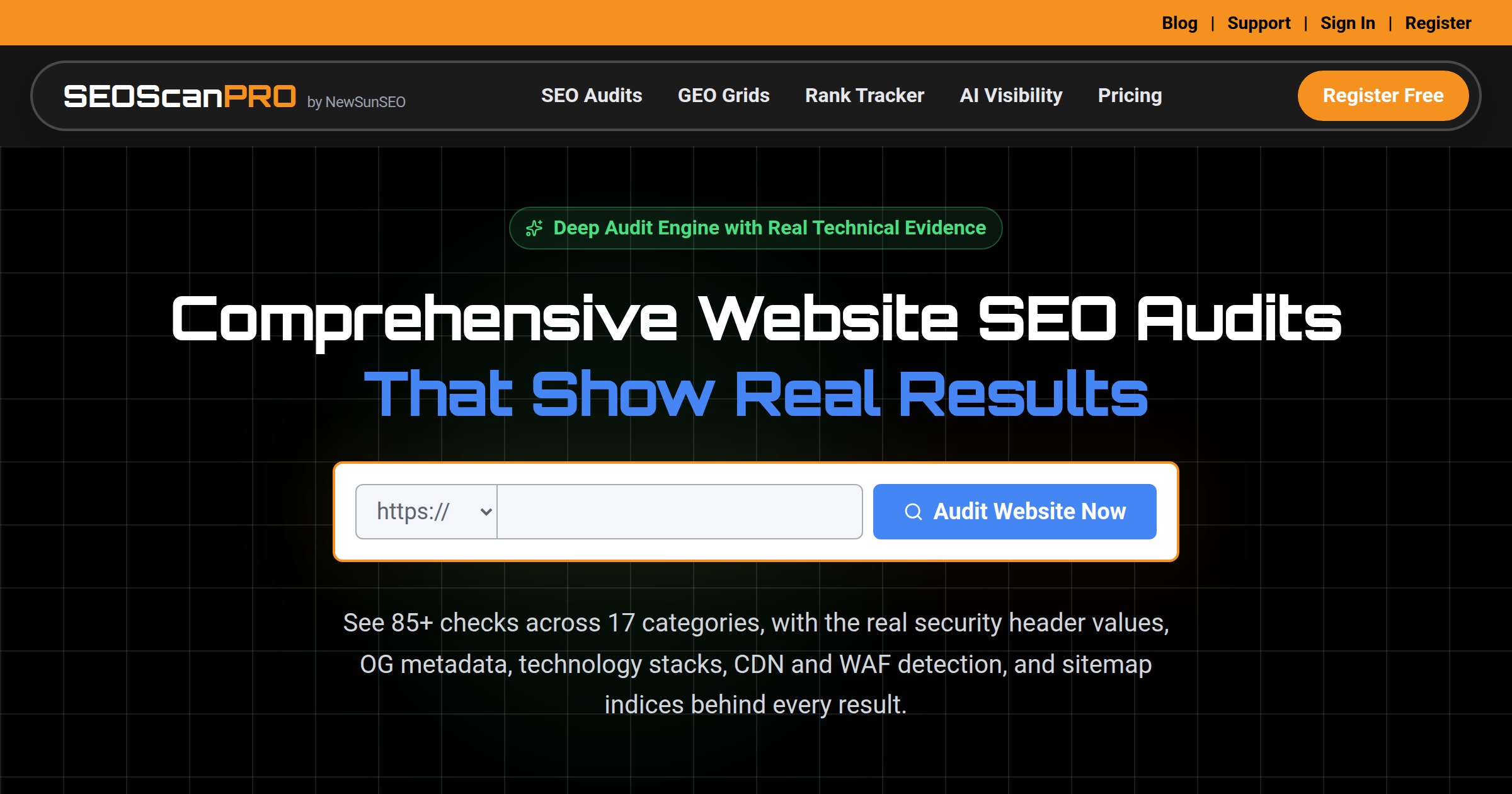
SEOScanPRO has a rank tracker that runs a full technical audit of a site and shows the measured result behind every check. Open the rank tracker.
Want help with this in Myrtle Beach or Long Island? Talk to us.
NewSunSEO
Grow in Google and AI Search
AI-SEO, local search, paid ads and websites from one team, with offices on Long Island and in Myrtle Beach.
- AI-SEO
- Local AI-SEO
- AI Consulting
- PPC
- Web Design
- Web Development
- Long Island Office(631) 320-1700
- Myrtle Beach Office(843) 492-7131
Request a Free Proposal
Tell us about your business and where you want to grow.
We will reply by email to talk through your goals and what a proposal would include.
We use your details only to reply to you and send what you asked for. See our Privacy Policy.

