


Search engines answer four kinds of goals: learning, reaching a known site, comparing options, and taking action. Mapping each keyword to one of those four intents lets a page meet what the searcher actually wants, which is the foundation of ranking well.
Pages that don’t match search intent usually rank poorly.
What are the different types of keywords?
Four intent categories cover nearly every search query:
- Informational: the searcher wants to learn something
- Navigational: the searcher wants to reach a specific website or page
- Commercial: the searcher wants to compare products, services, or brands before deciding
- Transactional: the searcher is ready to act, like buying, booking, or signing up
These same keywords are also grouped in other ways. Local keywords carry a location. Branded keywords include a brand name. Long-tail keywords are longer and more specific, so they usually have lower search volume. A single keyword can be local, branded, or long-tail and still belong to one of the four intents. “Sandwich places near me that deliver” is both local and transactional.
1. Informational
Informational keywords reflect a research stage. People use them to learn.
Examples:
- Coffee calories
- National coffee day
- What is the difference between cold brew and iced coffee
Many of these queries take the form of questions, starting with words like what, why, or how. The results pages tend to show articles, videos, and guides. Google also answers many of these queries directly on the results page through featured snippets, which are short excerpts from a single web page shown at the top, and through AI Overviews, which are AI-generated summaries that link to the pages they draw from.
Searchers at this stage usually research rather than buy. A page that answers common questions clearly can build brand awareness and show expertise without pushing a sale.
2. Navigational
Users use navigational searches when they already have a specific site or page in mind.
Examples:
- YouTube
- A specific blog name
- Where is a particular coffee shop located
The top result is usually the brand’s site. Google often adds sitelinks underneath, which are extra links to important pages on the same site, such as a homepage, a blog, or a studio tool.
3. Commercial
Commercial keywords reflect the comparison stage. People use them to weigh options, read reviews, or look for a deal before deciding.
Examples:
- Best cold brew
- A specific brand’s iced coffee flavors
- Dunkin cold brew vs Starbucks cold brew
Listicles, side-by-side comparison articles, and review pages tend to target these searches well. AI Overviews also appear for commercial searches. One study that analyzed more than 600,000 U.S. desktop keywords across 10 industries found that the share of commercial-intent results pages showing an AI Overview grew 71% between November 2025 and April 2026. Reaching these searchers means answering the comparison questions they ask, including those shown in the People Also Ask box, the list of related questions Google displays on many results pages.
4. Transactional
Transactional keywords signal action. The searcher is ready to buy, subscribe, or book.
Examples:
- Buy crypto online
- Sandwich places near me that deliver
- Pickup truck for sale
Words like buy, subscribe, order, or for sale often appear in these queries. Transactional searches also trigger Google Shopping Ads, which show product listings with price and image. Because searchers here are closest to converting, transactional keywords are valuable for both SEO and pay-per-click campaigns.
How phrasing hints at intent
The wording of a keyword gives a clue, but the search results confirm it. If the top results are product pages where a purchase happens right away, the keyword is transactional. If they are mostly reviews and comparisons, the keyword is commercial. If they are mostly guides and how-tos, the keyword is informational. If the top result is a brand’s homepage, the keyword is navigational.
How to check a keyword’s intent
Three checks confirm intent:
- Search the keyword on Google. Note whether the results are guides, brand sites, comparisons, or pages where someone can buy or sign up.
- Review any AI Overview, People Also Ask questions, and related searches for clues about what searchers want.
- Check the intent label in a keyword research tool such as Semrush’s Keyword Overview, which can be filtered by country.
This is especially useful for keywords that could fit more than one intent. In the U.S., the top result for “apple” is the technology company’s site, and the keyword is labeled navigational. The keyword “coffee beans” can return both commercial and informational results; this is called mixed intent. The same query can serve learning and comparison goals at once.
When an AI Overview is present, note which questions it answers and which sources it links to. Google has said AI Overviews and AI Mode may use query fan-out, a technique that runs related searches to help build a response. The answer can cover related topics beyond the exact words searched, which shows what else searchers tend to want to know and what a page might need to cover.
Semrush’s Keyword Overview and Keyword Magic Tool label each keyword’s intent with a letter: I (informational), N (navigational), C (commercial), or T (transactional). Some keywords get more than one label. To assign these labels, the tool looks at SERP features (the extras on a results page, such as featured snippets, ads, or an AI Overview), words in the query like buy, how, or address, and whether the query names a brand.
How to optimize for different types of keywords
The right optimization depends on which intent the keyword carries.
Optimizing for informational keywords
Review the search results for the target query. Note which questions the ranking pages answer and which formats they use, then check the People Also Ask box and any AI Overview for related information readers may need.
To make the content useful and credible:
- Answer the main question near the top, then cover the details readers need
- Add original examples or firsthand experience where available
- Support factual claims with reliable sources, and link to them
- Name the author and explain their relevant experience or qualifications
- Have a qualified expert review topics that require specialist knowledge
These practices reflect Google’s E-E-A-T framework: Experience, Expertise, Authoritativeness, and Trustworthiness. Google has said trust matters most and that its systems use a mix of signals to identify content with these qualities.
Descriptive headings help readers find what they need quickly. Clear headings and a direct answer at the start of each section help each passage make sense on its own, which matters when AI systems like AI Overviews pull from the page to build an answer.
Optimizing for navigational keywords
List the brand and its main pages in search results.
- Highlight the brand name on the site, in the homepage’s H1 tag, and across key pages
- Maintain clear menus and an updated sitemap
- Create a Google Business Profile to verify the business
These steps help the site rank for branded searches.
Optimizing for commercial keywords
Make the product page answer what shoppers need while comparing options. Lead with the details that set the product apart, such as materials, specifications, or who the product is for. Add third-party proof, such as a review score, an award, or a certification. Answer the follow-up questions a shopper would otherwise search for, and put those answers in an FAQ on the same page.
Google’s AI Mode helps people compare products and draws on Google’s Shopping Graph, a database of product listings with reviews, prices, color options, and availability. Keeping product details complete and up to date in Google Merchant Center, which feeds the Shopping Graph, helps products surface in those comparisons.
It is also worth checking whether roundups and reviews rank for the target commercial keywords. Reaching out to those publishers about reviewing or including the product puts it in front of shoppers who are already comparing options.
Optimizing for transactional keywords
Put the action at the top of the page and remove anything that gets in the way. Make the product page, signup form, or booking flow obvious above the fold. Include the price, availability, and a clear call to action. Most visitors landing here already know what they want; they are looking for the fastest path to do it.
FAQ
What are the four main types of keywords in SEO?
The four main types are informational (learning something), navigational (reaching a specific site or page), commercial (comparing options), and transactional (buying, booking, or signing up). A keyword can also be local, branded, or long-tail and still belong to one of these four intent categories.
How do you tell what type a keyword is?
Search the keyword on Google and look at the results. If the top results are guides and how-tos, the keyword is informational. If they are mostly a brand’s site, it is navigational. If they are reviews and comparisons, it is commercial. If they are product pages where someone can buy right away, it is transactional. The People Also Ask box, related searches, and intent labels in keyword tools confirm the call.
How do you optimize a page for transactional keywords?
Put the action above the fold with a clear call to action, the price, and current availability. Remove anything that gets in the way of the purchase, signup, or booking. Transactional keywords also trigger Google Shopping Ads, so keeping product listings accurate in Google Merchant Center helps both paid and organic visibility.
SEOScanPRO
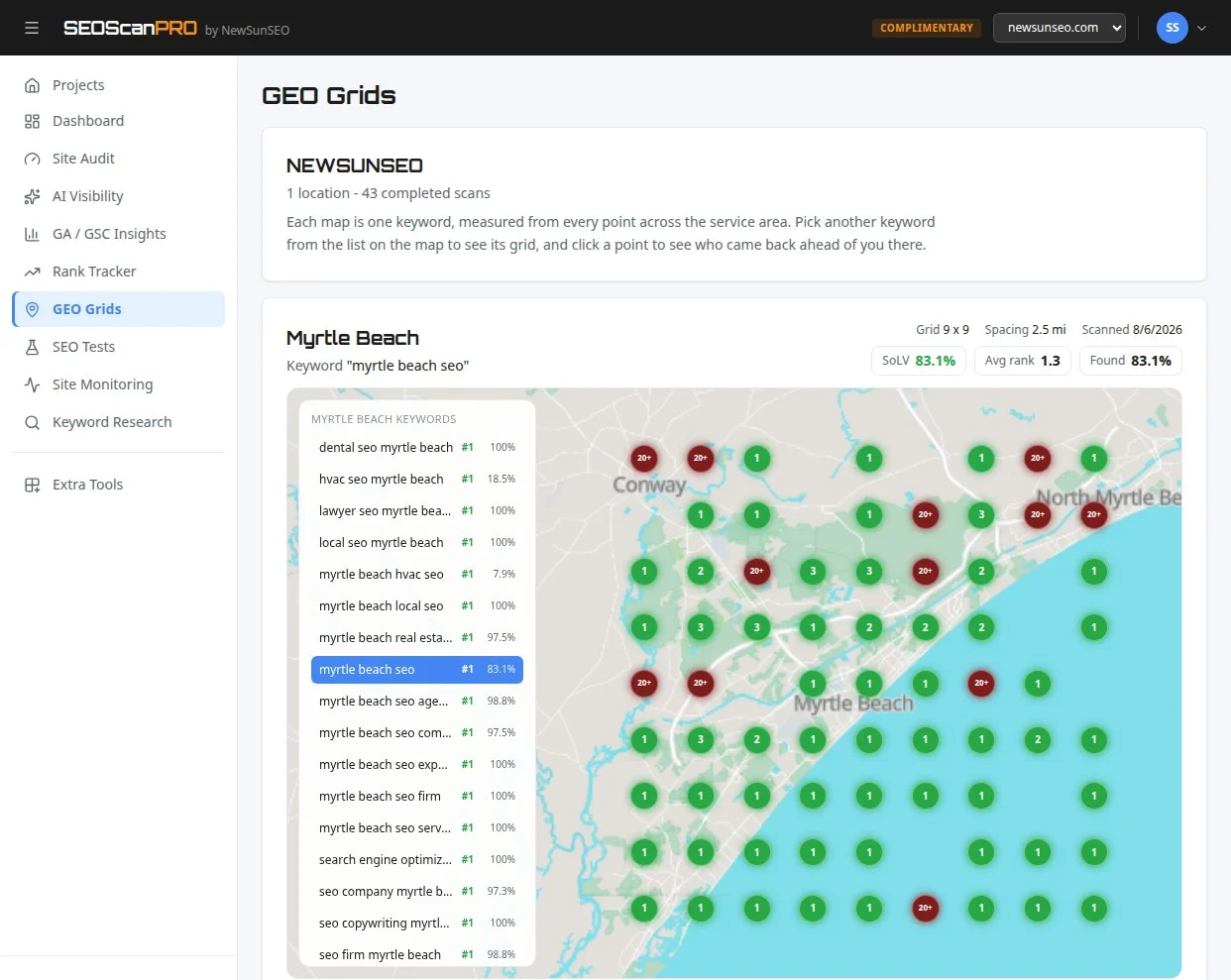
SEOScanPRO runs a full technical audit of a site and shows the measured result behind every check. Open the geo grid tool.
Want help with this in Myrtle Beach or Long Island? Talk to us.
NewSunSEO
Grow in Google and AI Search
AI-SEO, local search, paid ads and websites from one team, with offices on Long Island and in Myrtle Beach.
- AI-SEO
- Local AI-SEO
- AI Consulting
- PPC
- Web Design
- Web Development
- Long Island Office(631) 320-1700
- Myrtle Beach Office(843) 492-7131
Request a Free Proposal
Tell us about your business and where you want to grow.
We will reply by email to talk through your goals and what a proposal would include.
We use your details only to reply to you and send what you asked for. See our Privacy Policy.

