



Third-party search rank trackers are receiving corrupted signals from Google, throwing off the keyword data that SEO teams rely on to measure visibility. At the same time, Google is pushing deeper into AI-driven results with the launch of Gemini 4 Argon in AI Mode and a redesign of Discover into a personalized concierge experience. The week also brought updates to Google Ads, new Bing experiments, and the introduction of OpenAI account managers for ChatGPT advertisers.
What is happening to third-party Google rank trackers?
Rank tracking tools are returning unreliable keyword position data. The disruption seems to stem from Google injecting fake or manipulated signals into the data these tools pull, alongside paywall barriers that restrict what they can access. SEO professionals who depend on accurate rank data to monitor client visibility and report results face significant fallout: position tracking is a foundational metric of the job, and unreliable data undermines reporting, competitive analysis, and day-to-day optimization decisions. Some people in the search community have called this one of the most disruptive tracking issues in recent memory.
What is new with Google AI Mode and AI Overviews?
Google launched Gemini 4 Argon and has begun using it inside AI Mode. The company also made several updates to how links appear in AI Mode and AI Overviews, though click-through data on those links is not being shared externally. Google is now testing a left sidebar dedicated to AI Mode within the main Google Search results page, giving users a more prominent way to enter the conversational search experience. Separately, AI Overviews are being triggered for typos and misspellings where no traditional search results exist, which changes how zero-result SERPs behave.
How is Google Discover changing?
Google is repositioning Discover from a content feed into a personalized assistant. If Discover becomes more assistant-driven, visibility inside it could depend on other signals than its current topic and interest model.
What did Google clarify about URLs, PDFs, and domain migrations?
Google addressed a series of technical questions during the week. The company explained how its systems treat hyphens vs. underscores in URLs and how emojis affect ranking. A separate clarification covered PDFs: how Google converts, links, renders, and indexes PDF content, including crawl limits. Google also responded to a complaint about a site that migrated to a new domain and continued seeing its old domain surface in search results roughly four months later, a recurring frustration for sites that rebrand or consolidate domains.
What is happening with Bing?
Bing is experimenting with Microsoft-Decision-1, a new model being tested inside Bing Copilot. Bing Webmaster Tools introduced a Topics Portfolio feature within its AI reporting section, giving webmasters a way to organize and monitor how their content categories perform in AI-related search surfaces. Bing is also testing a large single sponsored ad unit placed at the top of search results, a layout change that would push organic results further down the page.
What are the new Google Ads features?
Google Ads rolled out channel prioritization and budget allocation controls, giving advertisers more direct influence over how spend is distributed across campaigns. A new combined report now merges search terms and ad combinations into a single view, simplifying analysis. Google confirmed that poor image quality on a product listing will not prevent that product from appearing in Search or Ads, a clarification for retailers who worry about being suppressed for subpar creative. New automotive model feeds, or vehicle top ads, launched for advertisers in the auto sector. Google Ads is also testing the use of AI to help advertisers set goals and assemble assets. Behind the scenes, the Google Ads API will move to a twice-monthly release cadence, up from once a month, and version 26 of the API has shipped.
What changed with Universal Cart and local business profiles?
Universal Cart launched in the United States, letting shoppers carry items from multiple merchants through a single checkout flow within Google Search. For local businesses, Google added dietary attributes including gluten-free, dairy-free, halal, and kosher to Business Profiles, giving restaurants and grocery merchants new ways to signal what they offer to searchers.
What is happening with ChatGPT and OpenAI advertising?
ChatGPT appears to have dropped UTM parameters from its outbound links, making it harder for advertisers and publishers to attribute traffic back to specific placements inside the assistant. Separately, OpenAI is now assigning ChatGPT Ad Manager representatives to advertisers, signaling that the company’s ad business is moving from a self-serve experiment into a more structured sales motion with dedicated support contacts.
Rank tracking as a service-area visibility problem
When rank data is unreliable at the single-keyword level, it becomes even more important to see position across a full geographic grid, because a noisy average hides where a business is actually invisible. A geo grid rank report shows rank position mapped across every town and suburb in a service area, which is what SEOScanPRO’s GEO Grids produce.
FAQ
Why are Google rank trackers showing wrong data?
Rank tracking tools have started reporting unreliable keyword positions. Google is feeding fake or manipulated signals into the data these tools pull, and paywall restrictions are limiting access. Third-party rank tracking tools now give SEO teams skewed visibility data.
What is Gemini 4 Argon doing in Google Search?
Gemini 4 Argon is a Google model now running within AI Mode. Google also updated how links appear inside AI Mode and AI Overviews, and is testing an AI Mode left sidebar on the main search results page to make conversational search easier to reach.
What is changing in Google Ads this week?
Google Ads introduced channel prioritization and budget allocation controls, a combined search terms and ad combinations report, and automotive model feeds for vehicle advertisers. The platform is also testing AI for goal-setting and asset creation, the Ads API will release twice a month instead of once, and version 26 of the API has shipped.
Related coverage
- Google AI Search Box, Local Sponsorships and Review ROI in 2026
- Search Everywhere Optimization: Why Google Alone Isn’t Enough in 2026
- Google’s New AI Search Guidance: Why Non-Commodity Content Is the Only Strategy That Matters
SEOScanPRO
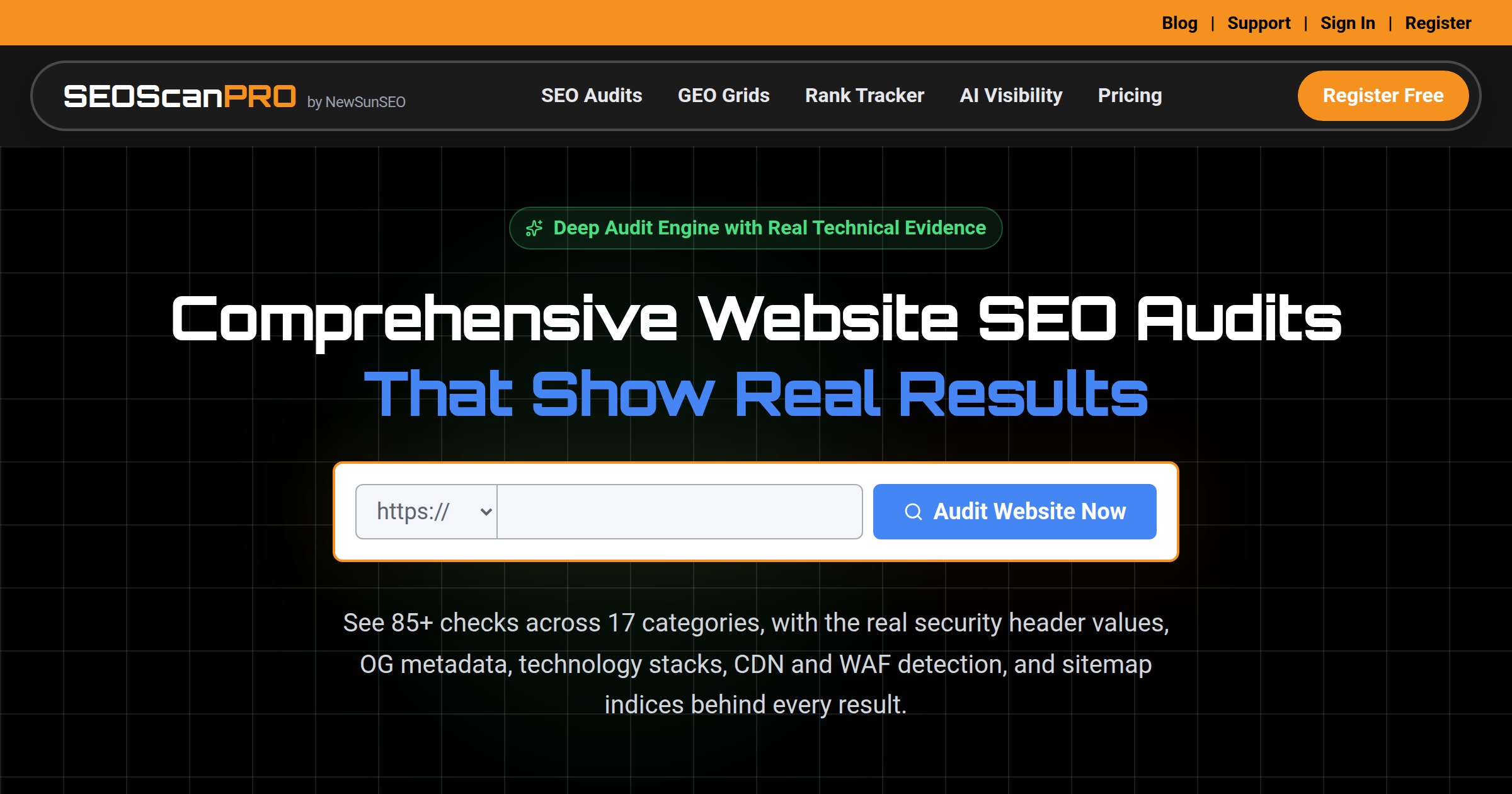
SEOScanPRO runs a full technical audit of a site and shows the measured result behind every check. Open the AI visibility report.
Want help with this in Myrtle Beach or Long Island? Talk to us.
NewSunSEO
Grow in Google and AI Search
AI-SEO, local search, paid ads and websites from one team, with offices on Long Island and in Myrtle Beach.
- AI-SEO
- Local AI-SEO
- AI Consulting
- PPC
- Web Design
- Web Development
- Long Island Office(631) 320-1700
- Myrtle Beach Office(843) 492-7131
Request a Free Proposal
Tell us about your business and where you want to grow.
We will reply by email to talk through your goals and what a proposal would include.
We use your details only to reply to you and send what you asked for. See our Privacy Policy.

