


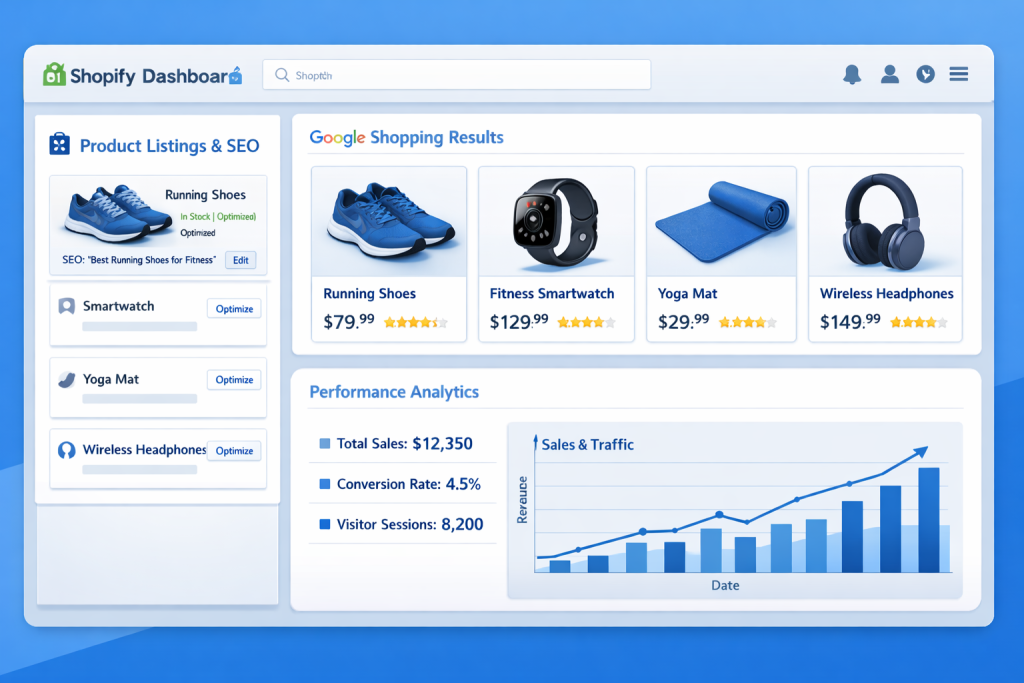
Shopify SEO in 2026 is harder than it used to be. AI Overviews and shopping-specific search features have changed how product searches surface results, but most local Long Island competitors haven’t updated their approach since 2022, leaving an exploitable gap for stores that execute correctly.
Shopify is the most widely used e-commerce platform among independent retailers, and Long Island has a healthy base of them: boutiques in Garden City and Huntington, specialty food businesses on the East End, sports and outdoor retailers across Nassau and Suffolk, and craft and artisan stores. The question they all face is the same: how do you get found by buyers who don’t already know you exist?
What does Shopify handle automatically for SEO?
Shopify handles several SEO fundamentals automatically: it generates clean URL structures, creates an XML sitemap, provides canonical tags to avoid duplicate content, and offers reasonable speed performance on modern themes. These defaults are better than most other platforms out of the box. But “better than most” doesn’t mean complete.
What Shopify doesn’t do automatically: optimize your page titles and meta descriptions (these default to your product names and store description, which are rarely optimized for search), create collection page content that ranks for category keywords, handle product schema markup comprehensively, or address the duplicate content issues that come from pagination and filter URLs. These require active work on your part or your agency’s.
The first thing to check on any Shopify store: go to Online Store > Preferences > Title and meta description. This is your homepage SEO. It should reflect your primary keyword, location, and value proposition, not just your store name. “Artisan Gift Shop in Huntington, Long Island, [Store Name]” is searchable. “[Store Name]” is not.
How should you optimize Shopify product pages?
Individual product pages are often the highest-traffic entry points for Shopify stores. People search for a specific product, land on your product page, and (if the page works) buy. The optimization work on product pages is straightforward but consistently underdone.
Unique, detailed product descriptions. Manufacturer descriptions copied to 50 stores are not unique content. They rank nowhere. A product description that describes the item specifically, addresses who it’s for, explains why it’s better or different from alternatives, and answers the questions buyers actually ask, that ranks. For a Long Island store, adding local context (“popular with Long Island fishing enthusiasts”) differentiates your listing from national competitors.
Target one primary keyword per product page. Don’t try to rank “handmade earrings” and “custom jewelry Long Island” and “artisan earrings gift” on the same page. Choose the most valuable keyword, use it naturally in the title, the first 100 words of the description, and the alt text of the primary image. Support keywords appear naturally if the description is written well.
Product schema markup. Google’s shopping results use structured data to display price, availability, and ratings directly in search results. Shopify generates basic product schema, but it often lacks review aggregation and availability signals. Apps like Schema Plus or custom liquid theme edits can complete the markup. Product schema markup increases click-through rate from search results measurably.
Why do collection pages matter for Shopify SEO?
Most Shopify stores invest zero effort in collection page content. A collection page titled “Women’s Jewelry” with no description and 24 product thumbnails is competing in a keyword category against major national retailers with massive SEO infrastructure. It won’t win.
Collection pages that rank have 200-400 words of category-level content at the top or bottom of the product grid. This content explains the collection, uses the primary category keyword naturally, and provides context that helps both search crawlers and shoppers understand what’s in the collection. For a Long Island store, this is where geographic authority lives: “Our handmade leather goods are crafted in small batches by artisans based in Long Island’s North Fork region” is the kind of content that simultaneously serves local buyers and establishes geographic relevance.
Collection pages also benefit from internal links. Each collection should link to related collections and to the most relevant product pages within it. This distributes PageRank across your product catalog and helps Google understand the hierarchy of your store.
How can Long Island Shopify stores win local SEO?
Shopify stores with a physical retail location on Long Island have a significant SEO advantage over pure e-commerce competitors: they can appear in local search results. “Gift shop Huntington” and “artisan jewelry near me” are local search queries that Amazon can’t win. You can.
To capture this advantage: connect your Shopify store to Google Business Profile. Ensure your physical address appears in your site footer and on a contact/about page. Add LocalBusiness schema markup that references your specific Long Island address. Earn reviews that mention your physical location. Maintain consistent NAP (name, address, phone) across Yelp, Apple Maps, Bing Places, and other directories.
For stores selling items that people commonly search for as local gifts (specialty food, art, handmade goods, outdoor equipment), queries like “Long Island gifts” and “artisan shops near me Long Island” represent meaningful search volume with competitive dynamics that favor local stores over national chains.
Speed, mobile optimization, and quality content are the same priorities for Shopify as for any other website. But Shopify-specific issues, canonical confusion from filter URLs, large image libraries without compression, app bloat from too many installed Shopify apps, need specific attention that general web speed guidance doesn’t cover.
NewSunSEO works with Long Island retailers running on Shopify and other e-commerce platforms. If you want an assessment of your store’s SEO and what’s worth prioritizing, reach out here.
FAQ
Is Shopify good for SEO in 2026?
Shopify handles several SEO fundamentals automatically, including clean URL structures, an XML sitemap, canonical tags, and reasonable speed performance on modern themes. However, it does not automatically optimize page titles, meta descriptions, collection page content, product schema markup, or duplicate content from filter URLs. Active work is still required to rank well.
What is the most important page to optimize on a Shopify store?
Product pages are often the highest-traffic entry points because people search for a specific product, land on the product page, and (if the page works) buy. Each product page should have a unique description, target one primary keyword, and include complete product schema markup with price, availability, and ratings.
How does local SEO help Long Island Shopify stores?
Shopify stores with a physical retail location on Long Island can appear in local search results for queries like “Gift shop Huntington” and “artisan jewelry near me,” which national competitors like Amazon cannot win. Capturing this advantage requires connecting the store to Google Business Profile, adding the physical address to the site, adding LocalBusiness schema markup, earning location-specific reviews, and maintaining consistent NAP across directories.
Wondering if your own business shows up in ChatGPT, Gemini, or Perplexity? Run a free BizScoreAI scan to check your AI Visibility Score and get a prioritized list of fixes.
Keep your social presence active across platforms with Feedsta, an AI social media manager that creates, schedules, and analyzes your posts, so your brand stays visible where customers research your business.
Related coverage
Want help with this in Myrtle Beach or Long Island? Talk to us.
NewSunSEO
Grow in Google and AI Search
AI-SEO, local search, paid ads and websites from one team, with offices on Long Island and in Myrtle Beach.
- AI-SEO
- Local AI-SEO
- AI Consulting
- PPC
- Web Design
- Web Development
- Long Island Office(631) 320-1700
- Myrtle Beach Office(843) 492-7131
Request a Free Proposal
Tell us about your business and where you want to grow.
We will reply by email to talk through your goals and what a proposal would include.
We use your details only to reply to you and send what you asked for. See our Privacy Policy.

