


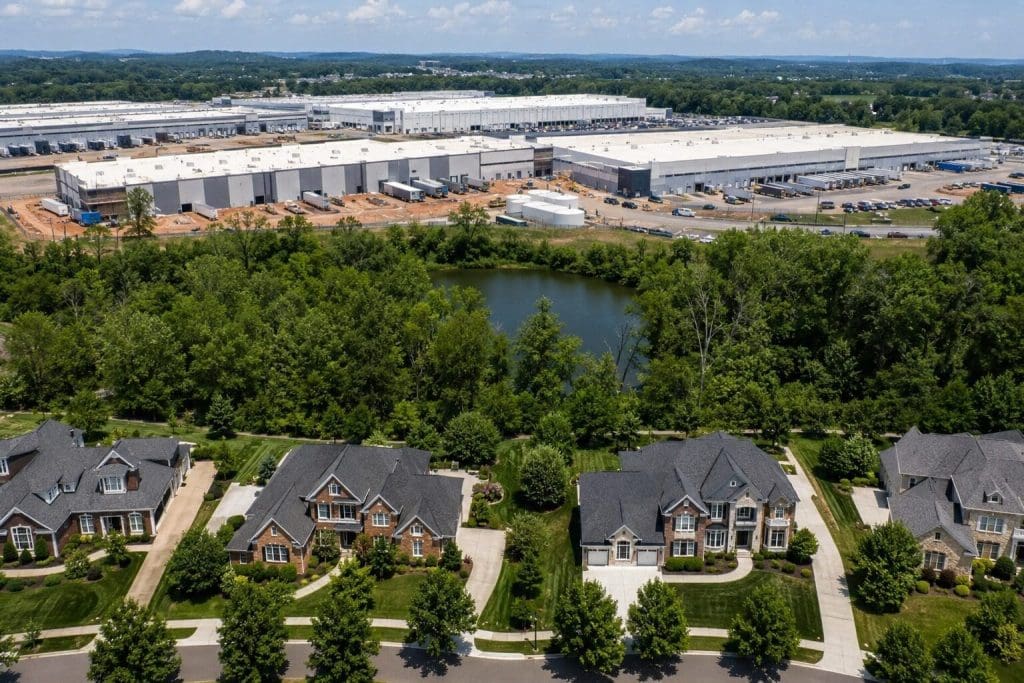
A new Gallup survey shows that 71% of Americans are somewhat or strongly opposed to the construction of artificial intelligence data centers in their local area, a level of resistance that exceeds the 53% who said they would oppose a nuclear power plant nearby.
What did the Gallup survey find?
Released on Wednesday, the poll asked Americans about their attitudes toward AI data centers built close to home. Key findings include:
- 71% of respondents said they are somewhat or strongly opposed to AI data centers in their area.
- 53% said they would oppose a nuclear energy plant in their area. More than one-third of the U.S. population lives or works within 50 miles of a nuclear power plant.
- 70% said they were worried to some degree about environmental impacts from the centers, which are known for their large energy and water consumption.
- Only 7% strongly favor building data centers nearby, while 20% are somewhat in favor, citing expected benefits such as job creation, economic growth, and increased tax revenue.
Opposition cuts across demographic groups and political parties. Women and Democrats were much more likely than Republicans to express strong opposition.
Why are people concerned about local data centers?
Half of those opposed to local data centers pointed to resource impacts, including excessive water use, high energy consumption, and the loss of farmland or wildlife habitats. Almost a quarter said they were most worried about quality-of-life issues and rising local costs, specifically mentioning higher utility bills and an overall increase in the cost of living. Other concerns included noise, light, air, and water pollution, as well as general worries about AI such as ethics, job stability, and a lack of regulation.
What makes AI data centers different from traditional ones?
AI data centers are specialized, high-performance facilities built for the mass training of artificial intelligence models. Before AI, data centers typically spanned about 100,000 square feet and were used mostly for internet-based businesses and cloud computing. The energy demands of AI have since driven the construction of megacampuses covering millions of square feet and hundreds of acres. These facilities house hundreds of thousands of the graphics processing units (GPUs) needed for AI training and can have energy needs equivalent to those of hundreds of thousands of households, factoring in the power, cooling, and storage required.
Data center construction is expanding fastest in Texas, Virginia, and Georgia, and companies such as OpenAI, Oracle, SoftBank, Amazon, and Microsoft have large projects underway.
What is happening in Lake Tahoe?
Nearly 50,000 residents of Lake Tahoe, a popular tourist destination in the Sierra Nevada Mountains, have been told their utility company, NV Energy, will stop providing them with electricity in 2027. The utility plans to redirect that power to data centers in northern Nevada, one of the fastest-growing data center corridors in the country, where Google, Microsoft, and Apple have either built or planned facilities. Residents have until next May to find a new electric provider.
What does this mean for the future of AI infrastructure?
Opposition to new data centers may continue to shape where and how AI infrastructure gets built, as major demographic groups express concern about factors including environmental impact.
Related coverage
- Americans Prefer Nearby Nuclear Plants Over AI Data Centers, Gallup Finds
- Public opposition to data centers rises sharply as power and water worries grow
Want help with this in Myrtle Beach or Long Island? Talk to us.
NewSunSEO
Grow in Google and AI Search
AI-SEO, local search, paid ads and websites from one team, with offices on Long Island and in Myrtle Beach.
- AI-SEO
- Local AI-SEO
- AI Consulting
- PPC
- Web Design
- Web Development
- Long Island Office(631) 320-1700
- Myrtle Beach Office(843) 492-7131
Request a Free Proposal
Tell us about your business and where you want to grow.
We will reply by email to talk through your goals and what a proposal would include.
We use your details only to reply to you and send what you asked for. See our Privacy Policy.

