



Meta’s new commercial terms apply to websites associated with business accounts on its platforms and authorize automated access to collect content, while questions about enforcement and fair use remain unsettled.
The terms cover accounts used to manage pages and groups, run advertisements, send marketing messages, and use Meta Business Suite. A business that does not agree must stop using Meta products for business or commercial purposes.
What the terms authorize
The new language permits Meta, or an entity acting for it, to use web scrapers, bots, robots, spiders, crawlers, and user agents. It also allows the company to create test credentials to access, index, cache, analyze, collect, retrieve, or crawl domains, pages, and URLs associated with a business user’s products and services.
The scope includes pages made available through the business user’s or its users’ use of Meta products and services. Meta may periodically pull updates from those pages.
Collected content may be used to provide, develop, improve, research, train, and maintain the integrity of Meta products, services, and features. Meta separately defines "AI at Meta" as part of its product family.
Why agencies should document the exposure
Matt Topic, a media and intellectual property attorney at Loevy & Loevy, said the provision could grant Meta access to material worth many millions of dollars in a licensing market. He also said publishers should assume the provision may be enforceable, even though a court could reach another conclusion.
James Grimmelmann, a professor of digital and information law at Cornell Law School, said the language appears to give news publishers permission for Meta to train AI on site content and possibly deploy that content in ways that compete with publishers. Under the broadest reading, he said, Meta could build a comprehensive archive and serve it through AI.
Benjamin Sobel, a law professor at the University of Wisconsin, compared the structure with tying in antitrust law. Sobel said, “If you want to use the Meta products that require acceptance of the commercial terms, you have to also acquiesce to the scraping and crawling permissions exacted in those terms.”
How should an agency check client accounts?
Start with the business account, not the website alone. The terms reach accounts used for advertising, messaging, page or group management, and business dashboards. An agency managing one or more of those functions should identify which client accounts fall within the update and record the relationship between each account and the client’s domains.
Next, review robots.txt. Meta said content owners can continue controlling crawler access through that file. The legal language reviewed for the article could also give Meta an argument that its commercial terms supersede other blocking instructions, so the file should be treated as one layer of the review rather than a complete legal answer for counsel to assess.
The terms also mention test credentials. Grimmelmann said that language could technically let Meta sign up as a fake user to pass a registration wall. Meta did not answer whether test credentials could bypass paywalls or other paid content. Consider documenting registration walls and paid sections separately rather than treating robots.txt as a complete answer.
What to do now
- Inventory every client Meta business account, including accounts used for ads, pages, groups, marketing messages, and Meta Business Suite.
- List the client domains, URLs, and product or service pages connected to those accounts.
- Check each domain’s robots.txt file and record which Meta crawlers it permits or blocks.
- Review registration walls, paid sections, and other access controls that may be affected by the test-credentials language.
- Consider having the client and its legal counsel assess whether continued business use of Meta products is acceptable before October 30.
What remains unresolved
The source article describes unresolved questions about AI training and fair use, with several lawsuits between publishers and AI developers moving through federal courts.
The article also describes a May class-action suit filed by five large book publishers that alleges Meta pirated millions of books to train its Llama large language models. Those allegations remain part of the litigation described by the source.
How this fits with platform access
Meta’s update arrives alongside its paid Meta One subscription service, which restricts the number of external links some accounts can post on Facebook and Instagram without subscribing. Some news publishers were reported to be exempt from the link limit, while Meta did not answer the question about the service.
The update also follows Google’s reported policy linking inclusion in traditional search with consent for content in AI Overviews and AI Mode. According to Google’s reported policy, websites could opt out through Google Search Console as of August 2026. The source states that Meta did not offer a comparable opt-out switch for its commercial terms.
For agencies managing client visibility, this creates a separate monitoring question. The commercial terms concern a platform’s contractual access to client sites. BizScoreAI, a national directory of business profiles with AI-powered business score tracking, includes AI-Audit and AI Scan tools for business listings and how a business appears to AI search.
FAQ
What do Meta’s new commercial terms say about scraping news sites?
The updated terms allow Meta and entities acting on its behalf to use web scrapers, bots, robots, spiders, crawlers, and user agents to access and collect content from domains, pages, and URLs associated with business users’ products and services or made available through their use of Meta products.
When do Meta’s new commercial terms take effect?
The updated terms are set to take effect on October 30.
Can businesses opt out of Meta’s new commercial scraping terms?
The terms say that anyone who does not agree should stop accessing or using Meta products for business or commercial purposes.
SEOScanPRO
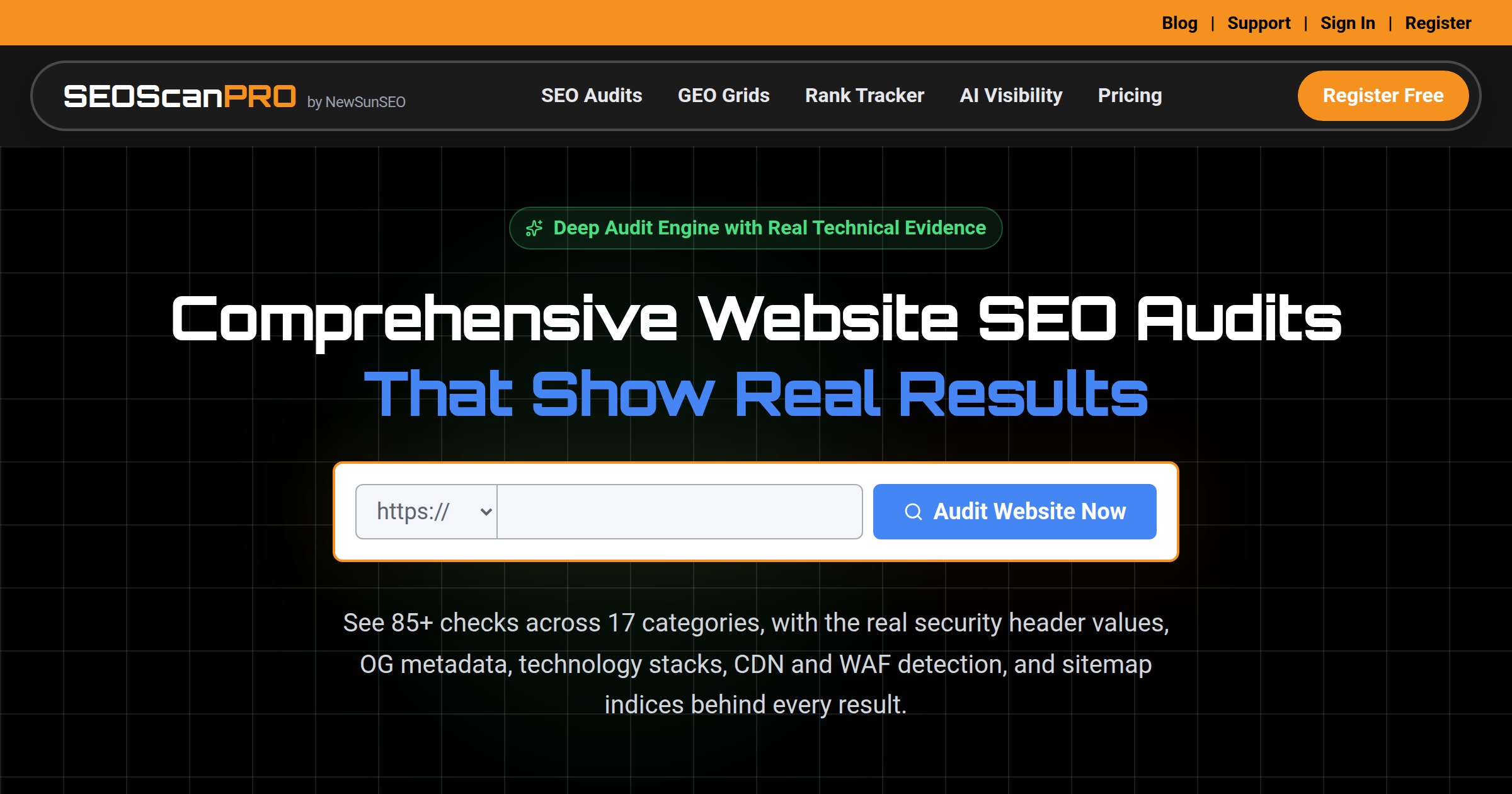
SEOScanPRO runs a full technical audit of a site and shows the measured result behind every check. Open the AI visibility report.
Sources
Want help with this in Myrtle Beach or Long Island? Talk to us.
NewSunSEO
Grow in Google and AI Search
AI-SEO, local search, paid ads and websites from one team, with offices on Long Island and in Myrtle Beach.
- AI-SEO
- Local AI-SEO
- AI Consulting
- PPC
- Web Design
- Web Development
- Long Island Office(631) 320-1700
- Myrtle Beach Office(843) 492-7131
Request a Free Proposal
Tell us about your business and where you want to grow.
We will reply by email to talk through your goals and what a proposal would include.
We use your details only to reply to you and send what you asked for. See our Privacy Policy.

