



Site owners can now use new Chrome-reported metrics to understand how ads affect real user experience on their pages. Google has added the experimental CrUX ad metrics to the page experience resources section of its Search results help document. The addition follows the launch of those metrics last week, and it does not make them a direct search ranking factor.
The documentation adds: “CrUX ad metrics: These experimental CrUX metrics from Chrome can help you understand your site’s ad count, ad density, and ad weight metrics.” They provide insight into real users’ ad experiences on your site, as seen and reported by Chrome.”
Google placed the line under the “Page experience resources” section, not under any ranking signal list. A Google representative explained the reasoning directly: the metrics were included because they are available as tools to help evaluate the state of a site. Not everything is a direct search ranking factor. There are plenty of ways to improve the experience of a website, and having metrics sometimes makes it easier to discuss and work on it, whether that work is SEO or not.
What Each CrUX Ad Metric Measures
Each metric measures a separate part of the ad experience Chrome users see.
- Ad Count: The average number of ads in the viewport.
- Ad Density: The average fraction of the viewport area occupied by ads.
- Ad Weight (Network Usage): The resources consumed by ads, measured in bytes.
- Ad Weight (CPU Usage): The resources consumed by ads, measured in milliseconds.
How This Fits the Page Experience Conversation
The update lands in the middle of a long-running discussion about how much page experience and Core Web Vitals matter for Google Search rankings. Google has made qualified statements over time about the importance of these signals. The company has said it did not confirm page experience or Core Web Vitals as a direct ranking factor, and then later confirmed Core Web Vitals as a ranking factor.
The distinction comes down to ranking systems versus ranking signals. Page experience is a ranking signal but not a ranking system, meaning it is one input used by other systems rather than a standalone system of its own. Google also removed the page experience report from Search Console, which added to the confusion about how heavily the signal weighs in practice.
What the documentation update shows is a narrower, more practical purpose. These ad metrics give publishers a shared set of numbers to discuss and act on, without implying that improving them will directly lift search positions. A site with heavy ad weight or a crowded viewport can be measured precisely now, and that measurement can guide design and monetization decisions on its own terms.
What Site Owners Can Do With the New Metrics
Site owners can use the metrics to evaluate the ad experience on their own pages as Chrome users actually see it. A high ad density score points to a viewport crowded with ads. High ad weight scores, whether network or CPU, point to ad resources that slow page performance or consume device resources. Seeing all four together helps separate an ad layout problem from an ad payload problem.
This fits a broader approach to page quality: signals may not be confirmed direct ranking factors but can still describe the experience a real visitor has. A slow-loading page with heavy ad payloads may lose visitors regardless of how ranking systems treat the metric.
For publishers who want to audit the full technical picture of a page, a site audit can show how on-page factors and performance checks line up with what Chrome reports. The ad metrics from CrUX add another view, focused specifically on the ad load rather than the page as a whole.
FAQ
Are CrUX ad metrics a Google ranking factor?
No. Google added the CrUX ad metrics to the page experience resources section of its help document, not to a list of ranking signals. A Google representative stated that not everything is a direct search ranking factor.
What do the CrUX ad metrics measure?
They measure ad count, ad density, ad weight by network usage, and ad weight by CPU usage. The metrics reflect real users’ ad experiences as seen and reported by Chrome.
Is page experience a Google ranking signal?
Page experience is a ranking signal but not a ranking system, according to Google’s earlier clarification. It is one input used by other ranking systems rather than a standalone system, and Google has also removed the page experience report from Search Console.
Related coverage
SEOScanPRO
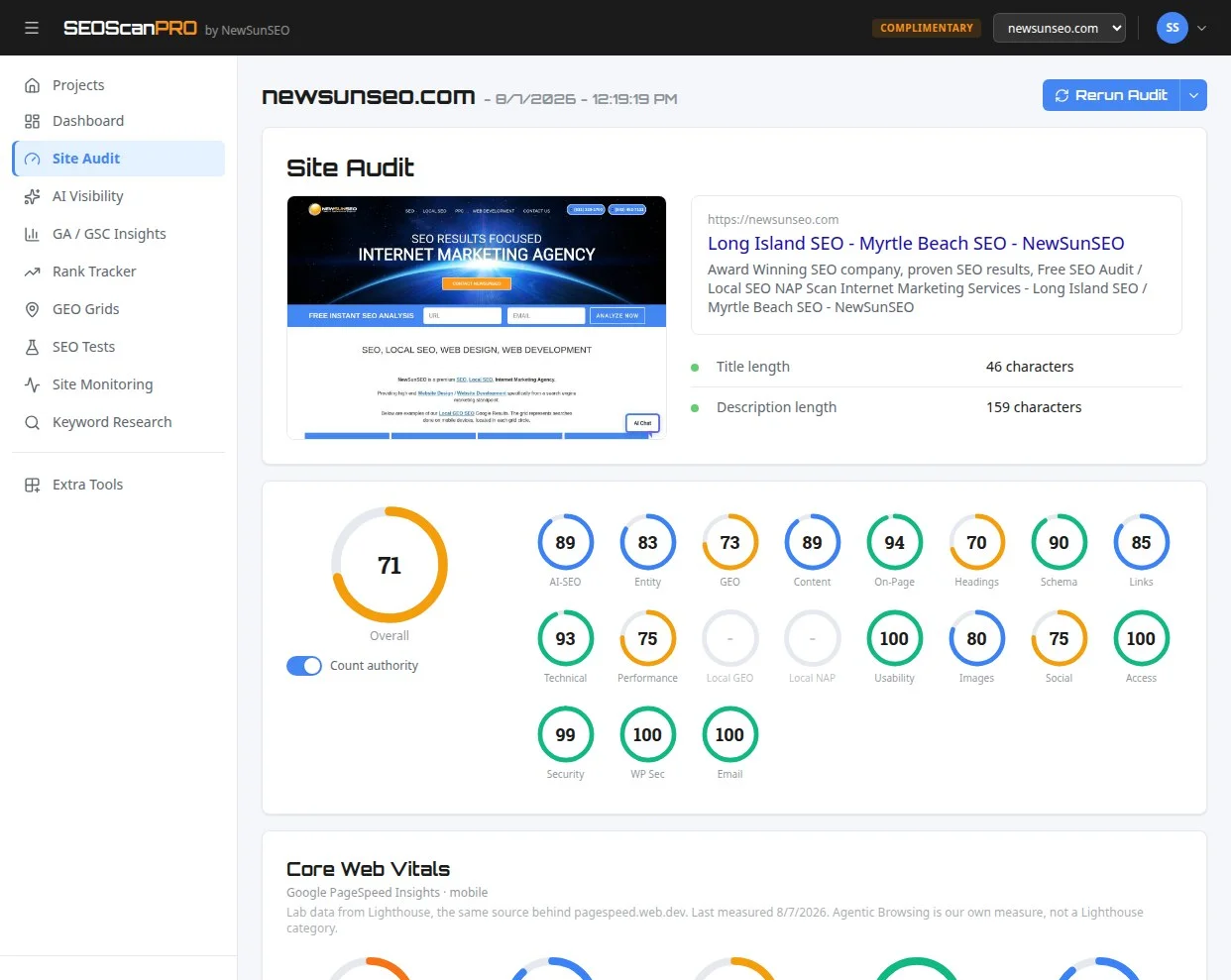
SEOScanPRO runs a full technical audit of a site and shows the measured result behind every check. Open the site audit tool.
Want help with this in Myrtle Beach or Long Island? Talk to us.
NewSunSEO
Grow in Google and AI Search
AI-SEO, local search, paid ads and websites from one team, with offices on Long Island and in Myrtle Beach.
- AI-SEO
- Local AI-SEO
- AI Consulting
- PPC
- Web Design
- Web Development
- Long Island Office(631) 320-1700
- Myrtle Beach Office(843) 492-7131
Request a Free Proposal
Tell us about your business and where you want to grow.
We will reply by email to talk through your goals and what a proposal would include.
We use your details only to reply to you and send what you asked for. See our Privacy Policy.

