



Bing is testing a redesign of its search result snippets that drops the site name and shows only the page URL. The change mirrors an experiment Google ran roughly a year earlier, where the site name was removed in favor of a plain URL.
The snippet format in question replaces the familiar blue site name that usually sits above a page title with just the URL itself. For a user, that means more characters of the URL are visible in the result, but the brand name that would normally signal which site the result comes from is gone.
What the new Bing snippet looks like
In the test, a Bing result shows the full URL in place of where the site name would normally appear. The page title, description, and other standard snippet elements remain, but the recognizable site name is absent.
This is the same approach Google tested around a year ago, removing the site name from its own search result snippets and leaving only the URL visible. Bing’s experiment appears to follow that earlier direction.
Why drop the site name from a snippet?
Removing the site name frees up a line for other content or pushes more of the URL into view.
A search engine might run this test for practical reasons. Showing the full URL can give users more context about where a result points, including the domain path, which can help with assessing credibility at a glance. It also reduces redundancy, since the URL itself already contains the site name.
Taking the site name out of the title makes brand recognition harder. Many users skim results quickly and use the familiar site name to decide whether to click. Without the site name, a known brand appears indistinguishable from an unfamiliar one in search results, which can alter click-through patterns for publishers and users.
What it means for site owners and SEOs
For publishers, the bigger question is whether this format reduces clicks. Brand-aware searches, where a user types a brand name directly or recognizes it in a result, may behave differently when only a URL is shown.
This is a test, not a confirmed rollout. Bing runs a steady stream of small format experiments on its results pages, and most experiments never become permanent. Search marketers should treat the observation as data about what Bing is considering, not as evidence of a coming shift.
For a site owner, the takeaway is straightforward: the URL structure of key landing pages matters more if site names are hidden. A clean, readable URL that signals what the page is about carries more weight when the brand name sitting above it is gone.
How this fits the pattern of snippet tests
Search engines frequently tweak how snippets are displayed. They test favicon placement, title wrapping, description length, and which sub-links appear. Site name presence is one more element that can be turned on or off in an A/B test.
Microsoft has been particularly active with Bing’s visual format over the past year, adjusting ad labeling, result spacing, and how related searches appear. Removing the site name from snippets fits that pattern of small, frequent visual changes.
Should you watch for this in your analytics?
If a meaningful share of Bing traffic comes from users who already know a brand and search for it by name, a no-site-name snippet could change click behavior. The most useful early signal is a change in click-through rate from Bing on branded queries.
Rank tracking tools that pull result layouts, rather than just positions, are the right way to see whether the test is hitting a specific browser, region, or device. Geo grid reports that map how a result looks across a service area can also show whether the new format is showing in some markets but not others, since snippet tests are often rolled out unevenly.
FAQ
What is Bing changing in its search results?
Bing is testing a version of its search result snippet that removes the site name and shows only the page URL in that space.
Why is Bing removing site names from snippets?
The test removes the blue site name that normally sits above a page title, freeing up space and putting more of the URL in view. It mirrors a similar experiment Google ran roughly a year earlier.
Does this affect all Bing users?
The change is a test, not a confirmed rollout. Bing runs many small format experiments, and most do not become permanent. The feature may appear for only some users, devices, or regions.
Related coverage
- How to Adapt Your Marketing Funnel for AI Search (Without Starting Over)
- WordPress Site Migration Checklist: How to Move Domains or Redesign Without Losing SEO
- AI Mode Search: Why 88% Trust Results Without Comparing
SEOScanPRO
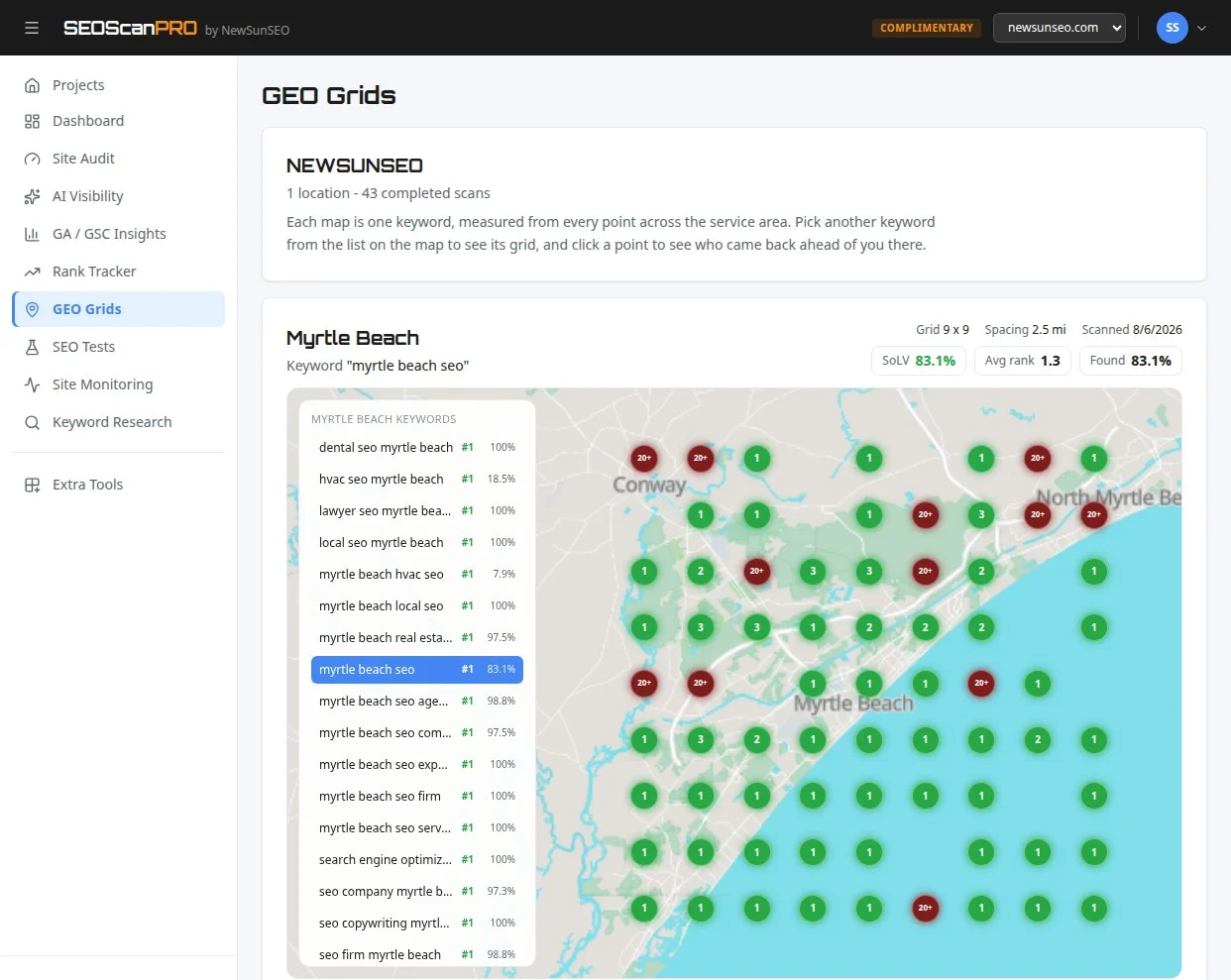
SEOScanPRO’s geo grid tool runs a full technical audit of a site and shows the measured result behind every check. Open the geo grid tool.
Want help with this in Myrtle Beach or Long Island? Talk to us.
NewSunSEO
Grow in Google and AI Search
AI-SEO, local search, paid ads and websites from one team, with offices on Long Island and in Myrtle Beach.
- AI-SEO
- Local AI-SEO
- AI Consulting
- PPC
- Web Design
- Web Development
- Long Island Office(631) 320-1700
- Myrtle Beach Office(843) 492-7131
Request a Free Proposal
Tell us about your business and where you want to grow.
We will reply by email to talk through your goals and what a proposal would include.
We use your details only to reply to you and send what you asked for. See our Privacy Policy.

